Smartphones · Samsung
Samsung Galaxy S26 Ultra: (Almost) The Perfect Smartphone
Verdict
Not perfect — the battery needs tuning and the privacy display trades away some clarity. But for the way I actually use a phone, it's a banger: that f/1.4 main camera, true unthrottled multitasking, and freedom from ecosystem lock-in.
Pros
- f/1.4, 200MP main camera: optics doing the work, not AI
- True multitasking: 4K60 export + heavy gaming, nothing pauses
- On-device APV log + LUT workflow is a creator's dream
- Quick Share to Mac ends the AirDrop excuse
- Speakers sound noticeably better than the S25 Ultra
Cons
- Battery management under real-world load needs work
- Privacy display makes the screen less anti-reflective than the S25 Ultra
- The 3x lens is low quality. I'd trade it for a bigger main sensor
We’re constantly chasing the perfect device, the ultimate tool that bridges the gap between our ambition and our reality. For the last 30 days, I thought I’d finally found it: a smartphone so powerful and so refined that it made me completely rethink my creative workflow.
Is the Galaxy S26 Ultra the perfect device, though? No. Don’t get me wrong, I love this phone, perhaps more than I should. But perfection is an illusion, and there’s one glaring problem with the S26 Ultra that we need to talk about.
A quick disclaimer up front: I’ve already done the head-to-head with the iPhone 17 Pro Max, so today is about the S26 Ultra itself. This is my raw experience, a month as my main device: travelling abroad, commuting, creating content. Parts of the video version were recorded on the S26 Ultra, wind and birds included, because that’s how you actually use a phone.
The elephant in the room: battery
Since launch, I’ve gone through 25 battery cycles in 30 days. For the most part, it’s been very good. Not excellent, not something I’d shout about, because the reality is I’ve had to reach for battery packs more often than I’d like.
The extreme example first. On the day I shot the iPhone comparison, I took both phones to Bath and spent a whole day on 4K60 video, calls, a bit of gaming, cold weather. Deliberately pushing it. The S26 Ultra died somewhere around 5 or 6pm. Yes, that was an unusually heavy day. But the iPhone coped with it. Controlled stress tests will tell you they’re on par; out in the real world, on 5G, in the cold, they weren’t.
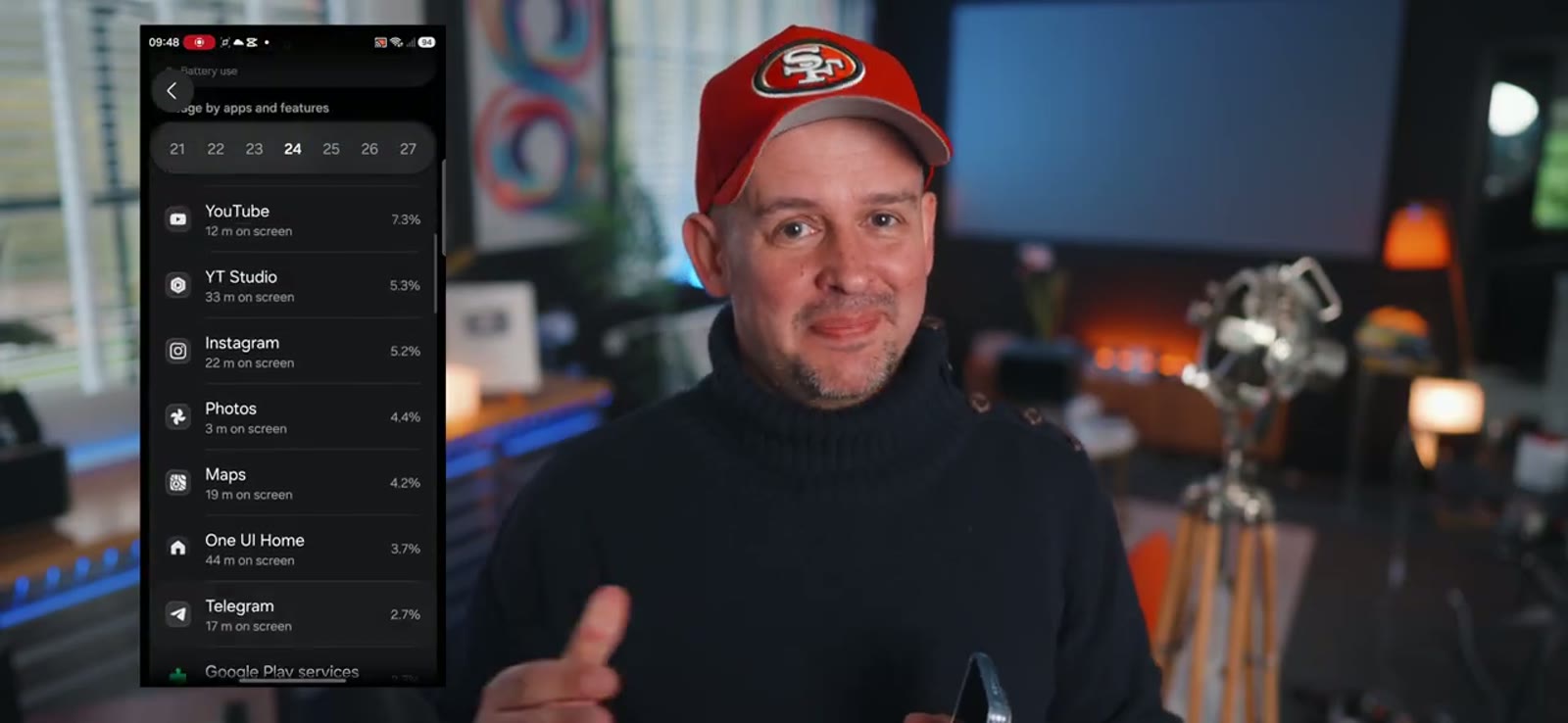
Here’s the more typical day, and the one that bothers me more. Commuting to London, Google Maps on 5G, mail, standard remote-work stuff, an event in the evening. I was approaching 50% after lunch (the exact breakdown is in the video), and with a busy evening ahead I got proper battery anxiety, found a coffee shop, and topped up to about 80%. Even then it was clinging on for dear life by the time I got home at 1am. And here’s where reality kicks in: if I hadn’t topped up, I couldn’t have told my wife I’d missed the last train, and I couldn’t have ordered the Uber home. It’s that important.
Samsung gave us faster 60W wired charging this year, and I’m grateful. But a phone this size, at this price, should finish a standard day with a comfortable buffer, and for me it doesn’t always. I have a strong theory about why, and we’ll get to it in the performance section.
Samsung, Apple: you’re late to silicon carbon
Something I learned in my corporate tech years: the Gartner hype cycle tells you where a technology sits on the innovation curve. Silicon-carbon batteries are not news anymore. Mid-range phones are shipping 7,500–8,000mAh cells on this tech, some with warranties guaranteeing 85% capacity after four or five years. Silicon expands as it charges, which was the early concern, but at least two brands I can confirm, Honor and OPPO, have engineered around it.
I understand why Samsung is cautious with batteries. Of all companies, who can blame them? But the caution has tipped into lateness. And I had a hunch this matters more than it used to, so I went looking for data: battery life now ranks right at the top of what people care about when buying a phone, up there with price. It’s time.
The camera keeps taking me aback
In the last month I’ve taken over a thousand images with this phone, and I couldn’t be happier. It’s genuinely astonishing that Samsung isn’t shouting more about the hardware here, starting with the f/1.4 aperture on the 200MP main camera.

This shot was nothing, just something for an Instagram story. But as soon as I saw it, it took me aback. I double-checked whether I’d used portrait mode or some special setting. Main camera, point and shoot. Every phone fakes background blur with software these days, Samsung included. But when the optics are this good, less AI is needed, and the fall-off in the image is natural in a way that’s genuinely camera-like. The glass in these lenses is new, too; I learned that from Samsung directly. That’s the thing worth shouting about, more than horizon-lock demos: the point-and-shoot shots of your holidays, your pets, your children.
The colour science has settled beautifully. Three or four years ago I’d be in the settings fighting oversaturation; now it’s right out of the camera. And Expert RAW into Lightroom is such an underrated workflow if you want to stand out. Editing RAW shots with the S Pen is one of my favourite things to do on this phone.
One complaint: the 3x lens. It’s low quality, I’ve barely needed it, and I’d happily trade it for a higher-quality crop from the main sensor, or better yet, an even bigger main sensor. Get rid of it.
For video, Samsung went to town. Shooting APV log with a LUT applied on-device is insane for creators: grade it on the phone, Quick Share it to the Mac, done. That’s another Apple-ecosystem excuse gone. If someone tells you they can’t leave because of AirDrop, that’s not an excuse anymore.
The display: brilliant, with an asterisk
It’s a brilliant display, and if you’re coming from another brand it will be a flat-out impressive upgrade. But, and I’m sorry, Samsung, you won’t like this, for S24 Ultra and S25 Ultra owners it can read as a downgrade in some scenarios. To get the privacy display working at a hardware level, compromises were made: side by side with the S25 Ultra, the S26 Ultra is noticeably less anti-reflective and a little less clear in certain light.
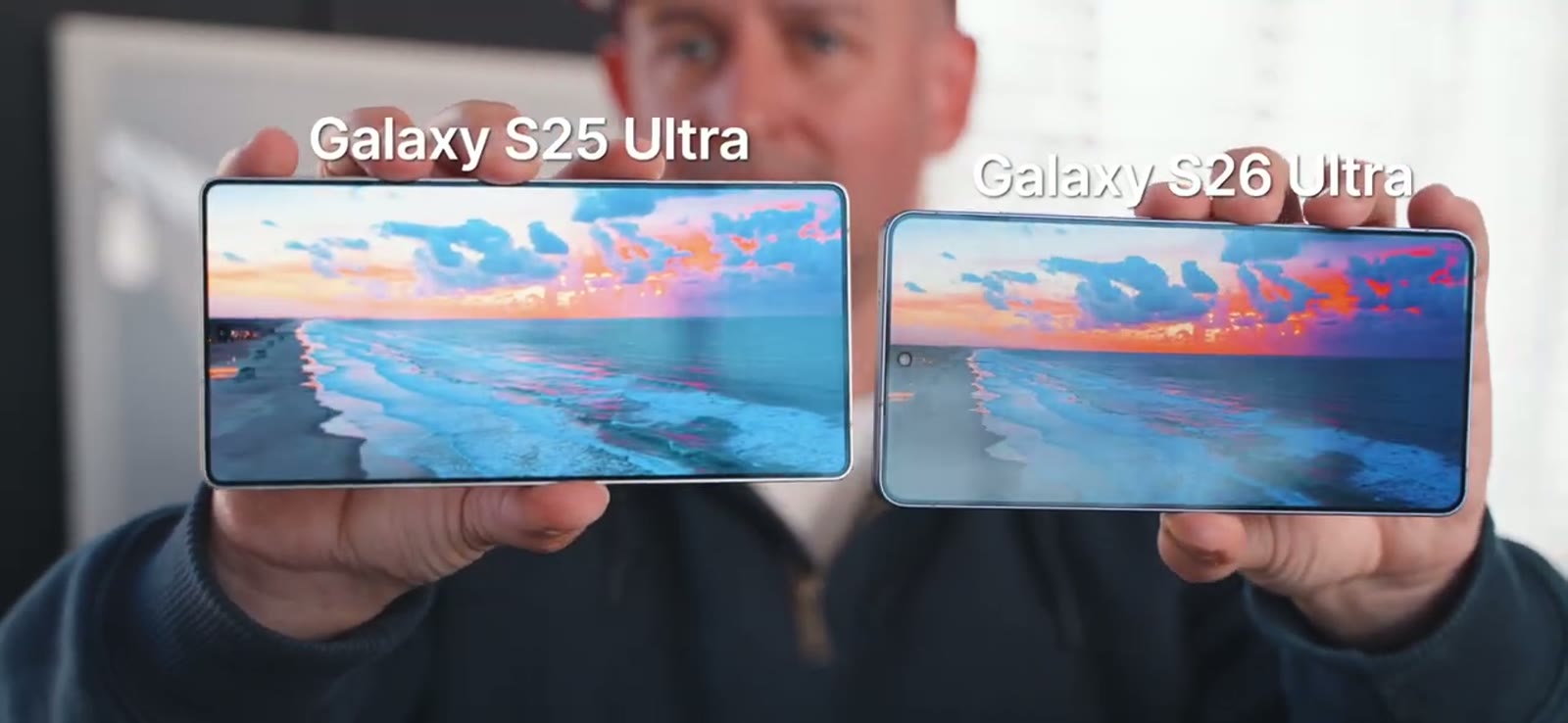
If you don’t care about the privacy display and you’re on an S24 or S25 Ultra, weigh whether the other upgrades are worth it. For me they are: that f/1.4 camera and the video features carry it. And the speakers, oddly, sound better than the S25 Ultra’s. My theory is the return to an aluminium frame changed the resonance; either way, they’re great.
Performance: this phone fakes nothing
The S26 Ultra fakes nothing.
Here’s my battery theory: the Snapdragon 8 Elite Gen 5 for Galaxy draws significantly more power and runs hotter than its competitors. The trade-off is absolutely insane raw performance.
The iPhone 17 Pro Max has a habit, one Apple would never dream of discussing, of aggressively closing background apps and pausing background operations to look like it’s multitasking smoothly. It’s become quite noticeable with iOS 26. So I ran a test: a 4K60 export while simultaneously playing Where Winds Meet on ultra settings. The S26 Ultra handled both massive workloads at the same time. Game running, export running, switch back and forth, nothing pauses. The S25 Ultra would log you out of the game. The iPhone used to crash at this outright; these days it survives, but it quietly pauses the export instead.
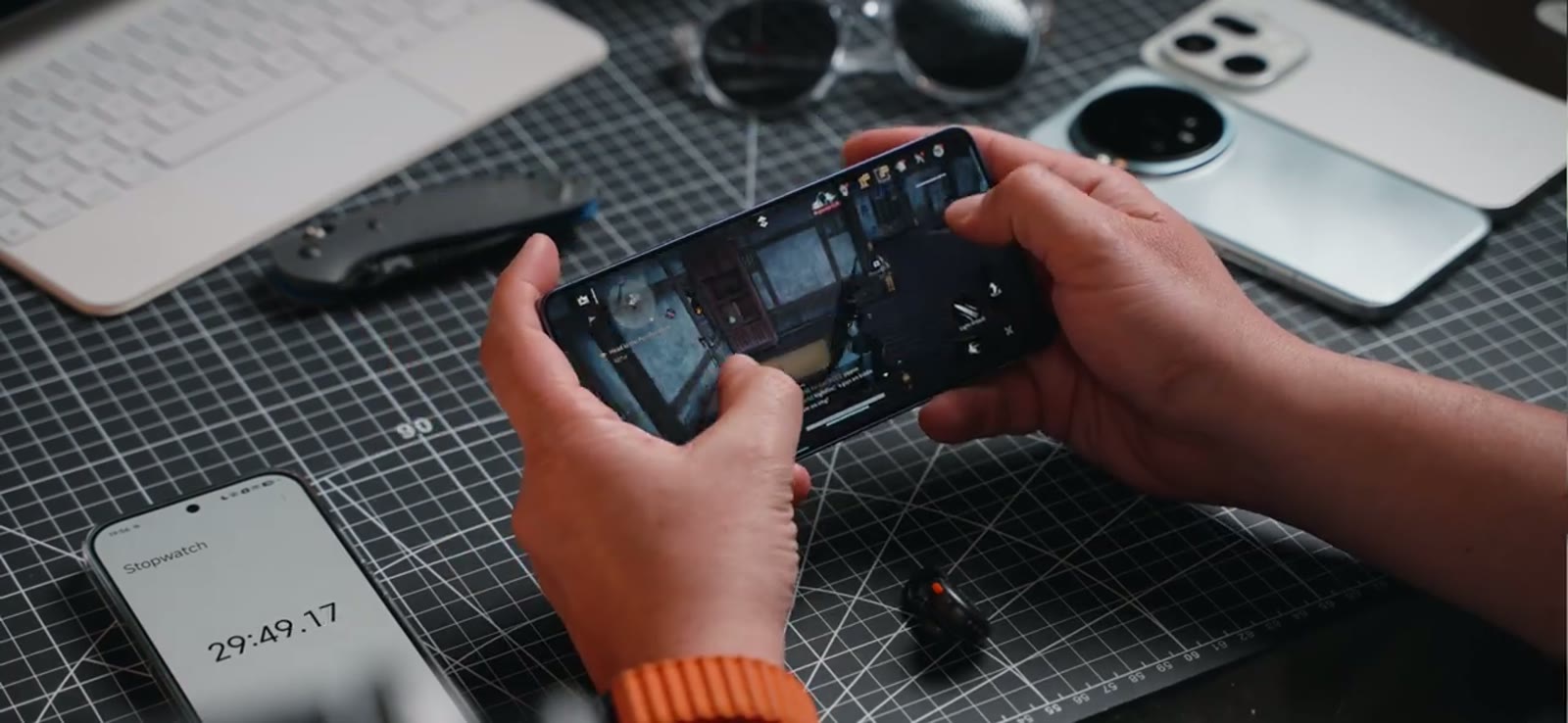
Under that pressure it reaches around 45°C. You notice the warmth, but I saw no thermal throttling and no dropped frames. That’s what matters. The battery management can and should improve, hopefully in software. The performance gains are out of this world.
So, is it the perfect device?
No. The battery needs tuning under heavy load, and the privacy display’s trade-offs won’t be for everyone. But despite those flaws, this phone is an absolute banger. For the way I actually use a smartphone, it offers a more versatile experience than the iPhone 17 Pro Max can: the f/1.4 200MP camera, true unthrottled desktop-class multitasking, and freedom from ecosystem lock-in. I can depend on this phone.
The real question is how long it keeps the crown, because the Android competition this year is fiercer than ever. The Xiaomi 17 Ultra is gunning for the camera space with its Leica optics, OPPO is gearing up to launch the Find X9 Ultra globally, and Honor brought serious heat with the Magic 8 Pro. Whether Samsung can hold them all off is exactly what I’ll be finding out. The full video review is here, and the head-to-heads are coming to the site next.