Wearables · Garmin
Garmin Epix (Gen 2), Six Months On: Goodbye Apple Watch Ultra
Verdict
I was sure I'd drift back to the Apple Watch Ultra and I never did. The Garmin is honest with you in a way the Apple Watch isn't, the data is easier to reach, and five or six days of battery means sleep tracking stops competing with charging. Garmin Pay still won't work with my bank, the heart rate takes 20 to 30 seconds to catch up, and it isn't a proper smartwatch. It doesn't pretend to be, and I like that.
Pros
- Five to six days of battery, so tracking sleep never costs you a charge
- Sleep breakdown and insights built in, with no monthly app to pay for
- Performance data is easy to reach instead of buried and simplified
- Honest coaching tone: no medals for standing up
- Works the same whether you carry an iPhone or an Android
Cons
- Garmin Pay still doesn't support Barclays or Monzo here in the UK
- Heart rate takes 20 to 30 seconds to register a change
- Phantom touches when the screen is wet
- No cellular, so no calls without your phone
I’ll be honest with you. When I first started using the Garmin six months ago I knew immediately it was a good watch, but deep down I always assumed I’d end up back on my Apple Watch Ultra. To my surprise, that hasn’t been the case at all. Here’s the full video.
Honest, in a way I didn’t expect
This is a sports watch first and foremost, and I’m a competitive person. What Garmin does really well is push you in a way that feels honest.
I enjoy the nice graphics and animations on the Apple Watch, but something about it bothered me for a long time and I think I’ve finally worked out what. It’s the slightly fake aspect: the social one-upmanship of friends collecting fictitious medals for burning 200 calories, and the almost sarcastic tone of “well done, you stood up” or “well done for washing your hands”.
The Garmin feels more like a real friend telling you that was rubbish and you need to do better. And the rewards, when they come, feel real.
You can see the same approach in how it hands you the data. Not everyone needs it or cares. But if you do, Garmin gives you very easy access to performance data, where on other watches the same information is diluted and over-simplified. The prompts during activities are simple and direct, in a get-on-with-it sort of way.
I’m no athlete and frankly the tech is probably wasted on me. For running, strength training and football, it’s almost perfect.
Sleep, and not paying for it
Sleep tracking is something I really value. With another business running alongside this one, most days it’s extremely difficult to keep a regular schedule, so every scrap of information about my sleep matters.
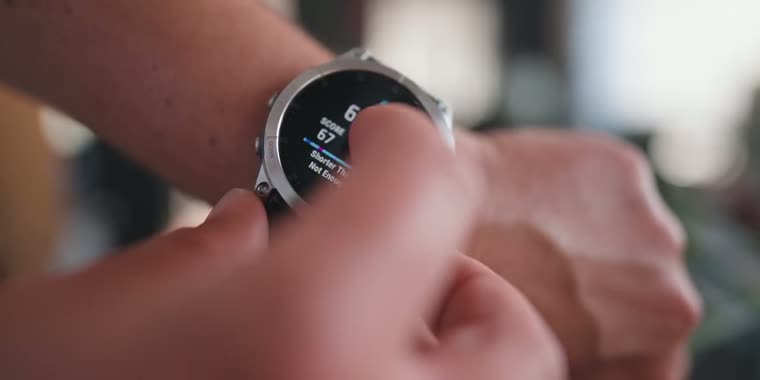
I appreciate that everything is built into the watch. A bad night gets explained simply but fully, with useful insight into the quality of what I got, based on stress and heart rate variability. With the Apple Watch the sleep tracking was okay, but to get the most from it I needed a separate app that cost me money every month.
The Apple Watch Ultra tempted me back, briefly
I’m not going to pretend it didn’t. When the new watchOS arrived and then the iPhone 15, I tried it again, and I can absolutely see the benefits from a smartwatch point of view. There’s no cellular on the Garmin, so you can’t take calls on it, and I did miss that.
After two days I went back to the Garmin, because I was reminded how poor the battery is.
Most people, me included before I tried a Garmin, will tell you two days of battery is fine, you charge it in the shower or overnight. I get that. But when you’re constantly busy, it is genuinely nice not to care about the battery for five or six days. The one thing I’d improve is the alerting: it shows days remaining on the display, but I’d like a proper nudge when you’re down to about a day.
The gotchas
Three or four things I’d like Garmin to fix.
It’s very sensitive to water, not in terms of resistance but touch. Get it wet and you get random inputs.
Then there’s Garmin Pay. I use Barclays, one of the most common banks in the UK. It wasn’t supported in the summer and it still isn’t six months later. The most annoying part is that it asks for your name, full address and card details, then asks for your name again, before giving you a “check back soon” error. That may well be the bank’s doing, so I tried Monzo, one of the more digital-friendly ones, and that failed too. I hear it’s better in other countries, and that rather sums up where this watch sits.
The next is a stretch, because Garmin don’t position these products this way, but with a touchscreen and decent connectivity I’d love cellular here, plus support for basic apps. Nothing wild: smart home controls, proper Spotify integration. What’s there feels limited.
Then heart rate, which is squarely within Garmin’s positioning. It’s consistent overall, but during activity there’s a noticeable lag. Run to your limit, start cooling down, and it’s a good 20 to 30 seconds before that shows on screen. The Apple Watch Ultra updates far faster.
Escaping the ecosystem
Here’s the part that turned out to matter most. There isn’t a Garmin phone, and in my case that was a good thing.
I really liked the Apple Watch Ultra. I think it was one of the best Apple products in recent years. But the benefits I was getting from Android phones outweighed keeping an iPhone purely to run a watch. This is not a like-for-like replacement for a smartwatch. It has some smart features, notifications, AirPods, music, but that isn’t where its strengths are.
Once I worked out that the Garmin gave me the three things I care about most, it was a no-brainer: sleep tracking, exercise tracking and battery life. It meant one less thing to worry about, because it doesn’t care whether it’s paired to an iPhone or an Android. That part of my setup is now free of lock-in.
If you’re worried about losing the fitness history you already have elsewhere, an aggregator like TrainingPeaks removes that barrier. I’m not sponsored by them, it’s just a good service that lets me use whatever watch and whatever phone I like and keep one source of truth. It costs money, but if you’re moving across or running both, it’s worth a look.
Where I landed
The Garmin is not a fully fledged smartwatch, and it doesn’t pretend to be. I really like that. If a smartwatch is what you want, look elsewhere. As a sports watch with some basic smart features, this is an excellent product, and I don’t see myself moving away from it any time soon.