Wearables · Huawei
Huawei Watch Fit 5 Pro: This Ruined All Other Smartwatches For Me
Verdict
A £249.99 watch with a titanium bezel, sapphire glass and a 1.92in AMOLED that hits 3,000 nits, and a battery that genuinely runs five to six days. Living with it through Paris, China and jet lag that wrecked my sleep, it never once made me think about charging. The paywalled extras in Huawei Health are the one real gripe, but almost everything that matters is free on the watch itself.
Pros
- Five to six real days of battery, so sleep tracking never fights charging
- 1.92in AMOLED at 3,000 nits, readable in direct sun mid-run
- Titanium bezel and sapphire glass at a price that shouldn't allow it
- Genuinely deep health suite: ECG, arterial stiffness, HRV, wrist temperature
- Golf maps for 17,000+ courses that actually worked at a random public course
Cons
- Watch faces and the better training content sit behind Huawei Health Plus
- That subscription is another £49 a year on top
- Contactless is Curve Pay only, so it depends on your bank setup
Testing a smartwatch shouldn’t just happen behind my desk here in the studio. To really know whether a piece of tech like this is worth your time, it needs to survive some real world scenarios. In my case that means the chaos of international press trips, tracking sleep through brutal jet lag, and the mundane reality of regular exercise and regular days at work. I lived with the Huawei Watch Fit 5 Pro for about a month. Here’s the full video.
Huawei invited me to the Paris launch and provided the watch. Some of you actually spotted it on my wrist in earlier videos, but I couldn’t confirm what it was until now. Huawei had no say in what follows.
The hardware punches well above its price
Visually this thing embarrasses its price tag. A titanium bezel paired with 2.5D sapphire glass gives it a properly premium, durable feel. But the star is the display: a 1.92in flexible AMOLED framed by 1.8mm borders, so the screen feels expansive and the bezel barely registers. On this orange version you get a thin line of orange running all the way around it.
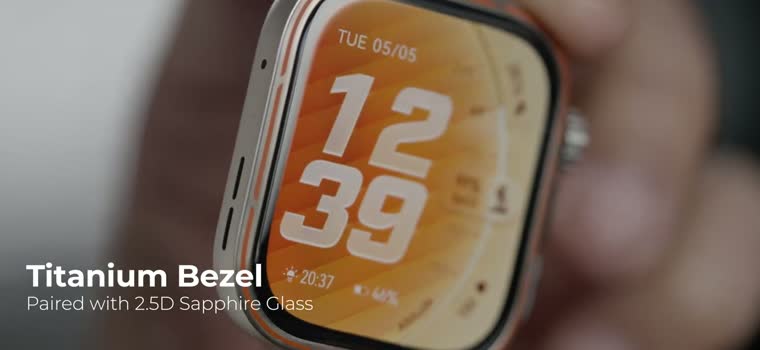
We got lucky with the weather in Paris, and checking my stats in direct sunlight while exercising was effortless. Smudges and all, it was easy to read in harsh direct sun thanks to 3,000 nits peak brightness and an adaptive LTPO refresh rate that scales from 1 to 60Hz.
Fitness: a 5K to the Eiffel Tower, and a panda
Straight out of the box we went for a 5K run up to the Eiffel Tower and back to the hotel. The post-run data breakdown was detailed in a way I didn’t expect at this price, with metrics like running power and single-leg running ability.
Back in the UK and back to my normal routine of the gym and gentle runs, the feature I keep coming back to is the mini workout mode. It needs zero equipment, and a small panda called Pen Pan walks you through quick sessions from 30 seconds to a few minutes. It sounds daft. It works.
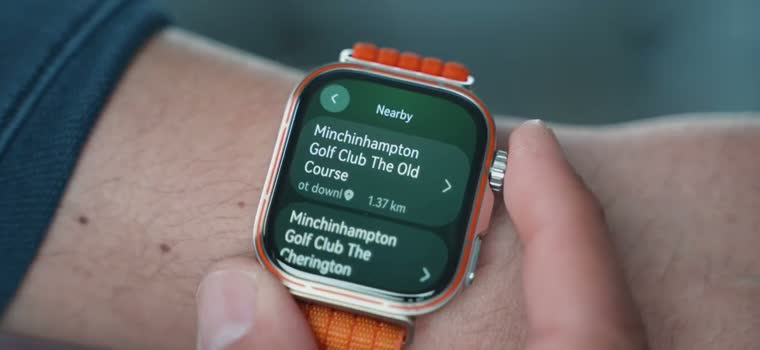
Beyond that it’s packed: an advanced cycling mode with virtual power, over 100 sports modes, and vector maps for more than 17,000 golf courses worldwide with over 3,000 mapped here in the UK. I didn’t take that on trust. I went to a random public course near my studio, opened golf mode, searched nearby courses, and there it was, ready to download and play. In the middle of nowhere.
Health tracking has shifted from passive to proactive
This is where the Fit 5 Pro genuinely surprised me. Huawei has clearly moved the focus from just recording numbers to watching for things. The cardiovascular side is strong: an ECG app, arterial stiffness detection and pulse wave arrhythmia analysis. For everyday wellness it monitors SpO2, tracks HRV all day including through the night, keeps tabs on stress and emotional wellbeing, and there’s a temperature sensor tracking wrist temperature trends, which is useful if you’re tracking ovulation data.
The bit that mattered most: sleep
After Paris I had one day back in the UK before flying to China for a week. Seven hours ahead doesn’t sound like much, but in my 40s it absolutely wrecked me. My sleep consistency fell apart, my stress spiked, my sleep score tanked.
Back in Paris we’d had a session with the sleep expert Sami Margo, and her point stuck with me: wearables aren’t going to fix your sleep, but they make sleep patterns visible. That matters, because poor sleep raises cortisol, which leaves you looking fatigued and can even lower skin hydration. Tracking the patterns is what lets you fix the habits underneath.
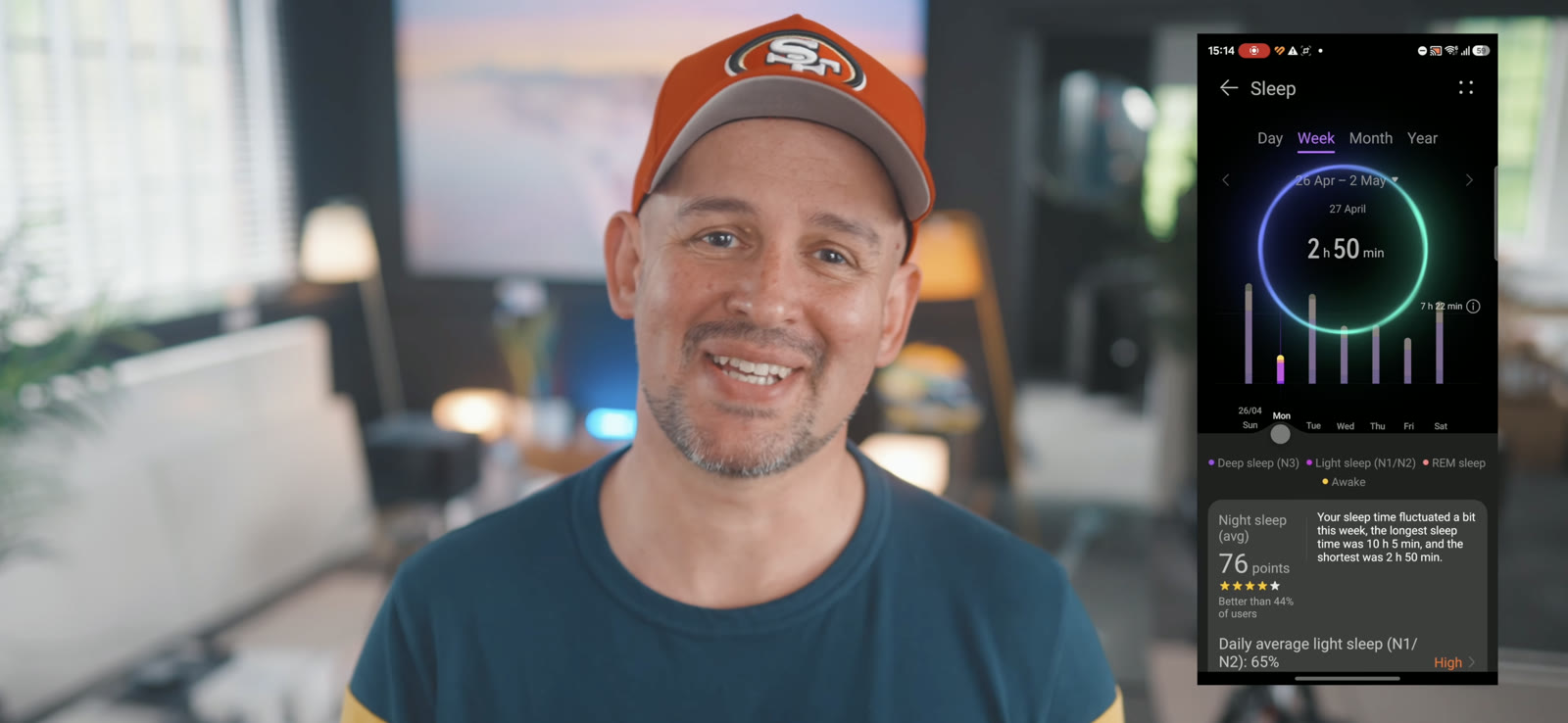
Watching my data fall apart in China was a wake-up call, pun intended. The enhanced sleep monitoring, breathing awareness, snore recording and afternoon nap logging let me course correct once I got home. It’ll even record your snoring with your phone. I used to pay monthly for an app that did that on my iPhone.
The subscription is the one real gripe
All of this lives in the Huawei Health app, which is a genuinely robust hub, and I like the new sleep additions like the built-in sleep music. But it isn’t all perfect. I really dislike being prompted to pay for things, watch faces included. To unlock the full ecosystem you need Huawei Health Plus, another £49 a year.
To be fair, the subscription does buy real features: structured HIIT plans, guided urban walks, and good mood improvement exercises like breathing and meditation. And you don’t need it. There’s plenty on the watch itself that costs nothing. But if you’re training for something big it’s worth knowing the wall is there.
The elephant in the room
Let’s address the brand itself and how Huawei is perceived here in the West. If you’re in Asia or parts of Europe you probably don’t care, but I’m aware of the conversation and you’ve raised it with me in the comments before, so it deserves an answer rather than silence.
I’m speaking purely from experience as a reviewer using their wearables. I’ve used the GT6, the Watch Ultimate, their phones and their tablets. Realistically, in terms of data collection, what this watch does is no different to what Google, Amazon and Apple devices do every minute of every day. Across a year or so with the GT6 Pro and the Watch Ultimate, and now this, I’ve been consistently surprised by how accurate the data is and how much of it there is, and I’ve seen nothing untoward with my data. That’s my experience. Make your own call.
Rounding out the smartwatch side, you get contactless payments through Curve Pay, which is worth knowing about before you buy.
Worth it?
For £249.99 the Watch Fit 5 Pro offers a staggering amount of premium hardware, pro-level battery life that embarrasses the competition, and a feature list that keeps going. It looks great on the wrist, it’s light and thin, and you can sleep in it without a thought. The biggest win for travelling and commuting is that battery: a high-silicon cell rated up to 10 days, and a realistic five to six if you’re moderately active. I never had to think about charging it once during those trips, or even remember to pack the charger.
If you can look past the paywalls on the extra fitness content, this is an incredibly capable daily driver. I really can’t recommend it enough.