Smartphones · OPPO
OPPO Find X10 Pro Max review: the first 200MP ultrawide, and it isn't wasted
Verdict
The camera has more character than anything I've used this year, and it makes me feel like a better photographer without making me work for it. If you love photography and you want the shot finished in the camera instead of later in Lightroom, this is the phone to beat so far. Whether it keeps OPPO's crown is a December question.
Pros
- Master mode gives photos actual character, finished in camera with nothing to edit afterwards
- The first 200MP ultrawide on any phone, with autofocus down to 4cm, so it doubles as the macro camera
- The 70mm telephoto is a peach, focuses to 10cm, and crops to 6x while still keeping 50MP
- Long exposure is a setting, not a screw-on ND filter and a prayer
- 17 stops of dynamic range, always on, no setting to remember
Cons
- 228g, and after a long day of shooting you feel it on your wrist
- The back is lovely to look at and a bit too slippery to hold
- Open Gate turns electronic stabilisation off, so it wants a gimbal
Last year the OPPO Find X9 Pro was my phone of the year. It beat every brand at every price, and OPPO liked that enough to put my words on their own public page.
So when this one arrived I had one question: can they do it again? 2026 is a much more competitive year than 2025.
OPPO has gone all in. Three 200MP cameras, including the first 200MP ultrawide on any smartphone. I’ve already heard people say 200MP on an ultrawide is wasted, so let’s settle that with photos rather than opinions.
Three weeks with it: around Bath where I live, and out to Mallorca for the launch.
A transparency note up front, because it matters. I did not buy this phone. OPPO sent it to me and I have to send it back, so it’s a loan. They also paid for the flights and the hotel for the launch in Mallorca. They did not pay me for this review.
The price, and the question underneath it
£1,499 in the UK, which is £200 more than the X9 Pro was last year. I’m not going to pretend that isn’t happening.
Some context, though. Pre-order and it’s £1,399, with a free gift worth up to £500, and not a token one: the teleconverter, the Watch 3 or the Pad 5. If the price drops on Black Friday, OPPO refunds the difference.
And the thing nobody enjoys talking about: memory prices. Every AI data centre on earth is buying the same memory that goes into your phone, and that is pushing prices up across the industry.
So the real question isn’t whether it’s expensive. It’s whether it’s worth it.
In the hand
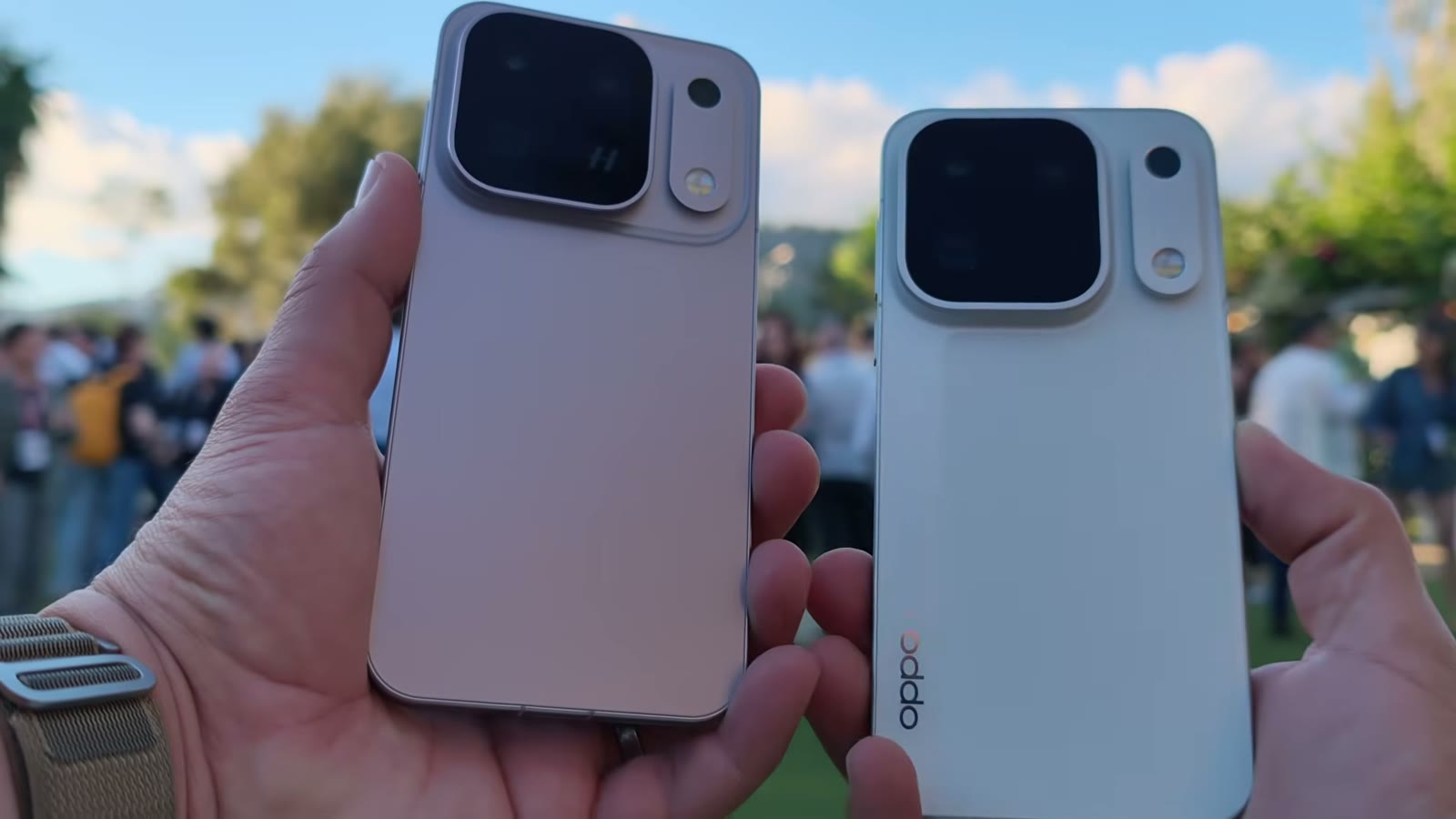
Titanium grey, aluminium frame, matte finish, flat sides with soft edges, velvet-textured glass. The back is a single piece of sculpted glass that flows into the camera area, which makes the bump look far less dramatic than it actually is.
Toughness is covered: IP66, IP68 and IP69, with Crystal Guard glass front and back co-developed with Corning.
It weighs 228g, and you feel it. In the hand, and on your wrist after a long day of shooting. It’s well balanced for its weight, but nobody would call it light.
A matter of taste: I like this colour, and having seen the two-tone Luna White with its focus-ring detailing and Hasselblad’s orange accent, I think I’d have that one. It looks like a camera, which on a phone this obsessed with photography makes sense.
There’s a snap key on the left. Short press saves what’s on screen into AI Mind Space, long press adds a voice note, double press opens it, and you can reconfigure all of it.
The display, and one feature I’d miss
6.78in flat, bezels just over a millimetre on all sides. Every number is flagship, so I’ll stick to what matters.
It hits 3,600 nits, so harsh sun is a non-issue. Turn the brightness right down at night and it switches to very high frequency dimming at 3,840Hz, which is easier on your eyes if you’re sensitive to flicker and get headaches from it. OPPO says it covers 95% of BT.2020, the colour standard used in film and TV production, which is a far wider range than most phones aim at.
The thing that actually caught my eye is the auto brightness. We’ve all done the walk outside, squint at a dark screen, wait, then walk back indoors and get blinded. There’s a new algorithm here that reacts almost immediately. It’s one of those things you stop noticing after two or three days, and then badly miss on another phone.
But let’s be honest, nobody buys this phone for the screen.
The cameras: character first, megapixels second
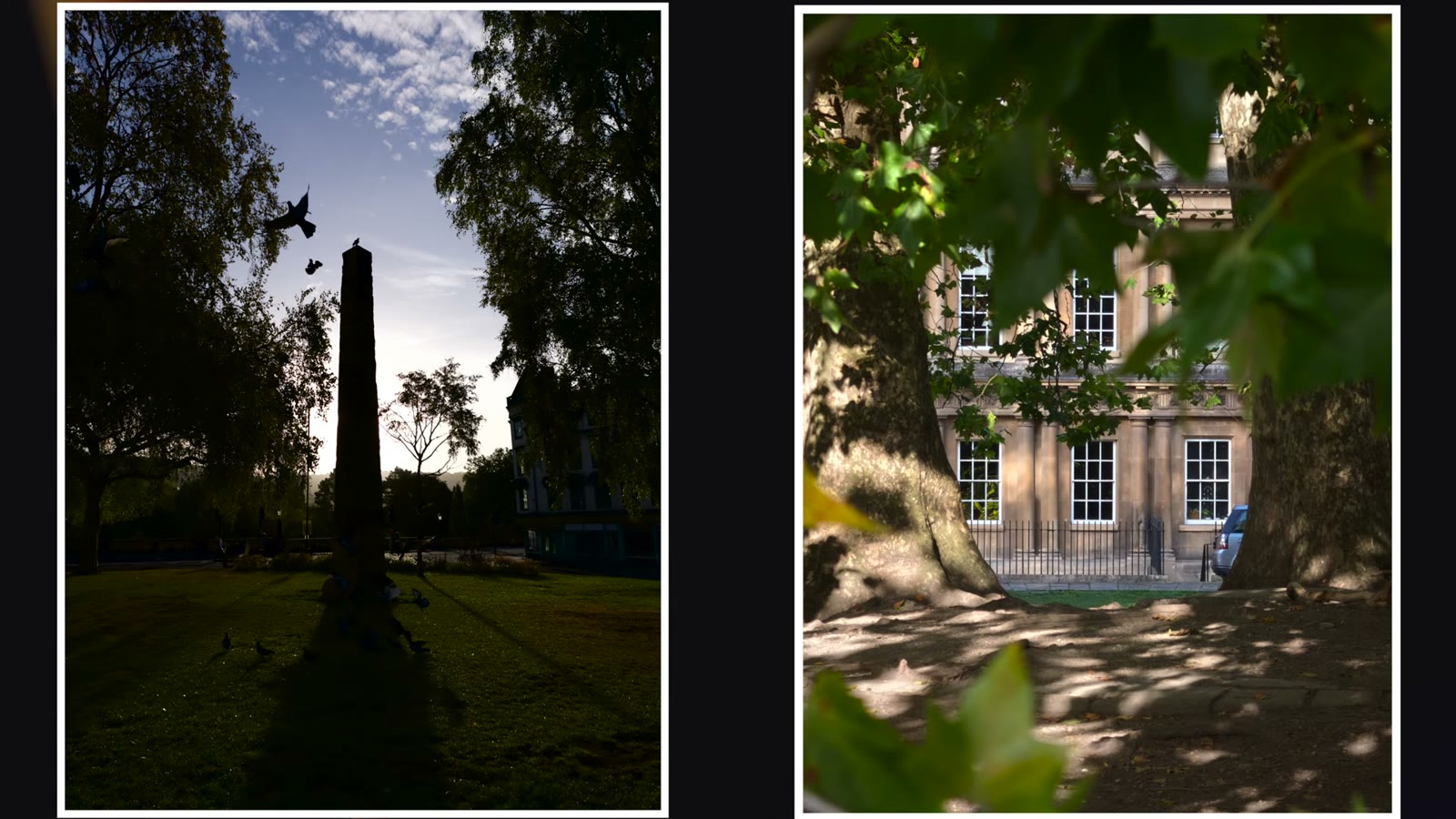
What got me first wasn’t the megapixels. It was the character of the photos.
I say this in a lot of reviews now: phones are getting boring. They all look very good and increasingly indistinguishable. Shooting around Bath in Master mode, the photos made me feel like a pro, and I’m not one. All I did was point and shoot.
With most phones the great shot happens later, back at your desk, in Lightroom. I enjoy that process, genuinely. With this one the photo out of the camera is already there. You can still edit it. You don’t need to.
Master mode is darker than you’re used to: moodier, deeper shadows, a bit of vignetting. That is exactly my taste, and in fact it’s what I edit other phones’ photos towards. OPPO’s new Lumo engine brings that look into the everyday camera too, holding back on heavy HDR so highlights stay bright and shadows stay deep.
If it’s too dark for you, don’t fight it. Stay in Master mode, go into the pro settings, and nudge the exposure. I usually go to a fill EV value. Or just use the regular mode for most shots.
There are 18 built-in looks, tweakable on a simple grid, tone one way and saturation the other. I keep coming back to Hasselblad Classic.
One thing to expect: at first glance these can look a touch softer than some phones. I noticed the same on the X9 Ultra. For me it reads as less smartphone-like, and when you zoom in you get real texture instead of crunchy edges.
Long exposure, without the screwed-on filter
Last week in Bath I was comparing against the iPhone, and to get the effect I wanted I screwed an ND filter onto the iPhone’s lens. On the OPPO it’s a setting. Long exposure mode, point, shoot, no filter, and arguably a better result.
Is 200MP on an ultrawide wasted?

No phone has done this before. Even 2026 camera flagships put 200MP on the main and the zoom and leave 50MP on the ultrawide.
It’s a 13mm lens with a 124 degree field of view, and crucially it has autofocus, down to 4cm, so it doubles as your macro camera. The macro results are genuinely excellent.
Looking at a full 200MP frame, the edges do soften slightly, which every ultrawide does, including real cameras once you go wider than about 20mm. The difference is that on a 50MP ultrawide that’s the point where things turn to mush. Here they don’t. So: not even close to wasted. It’s a real upgrade.
The 70mm telephoto is the one I’d miss
The main camera is a big sensor co-developed with Samsung, f/1.5 with stabilisation, which is what you want for night and for separation from the background.
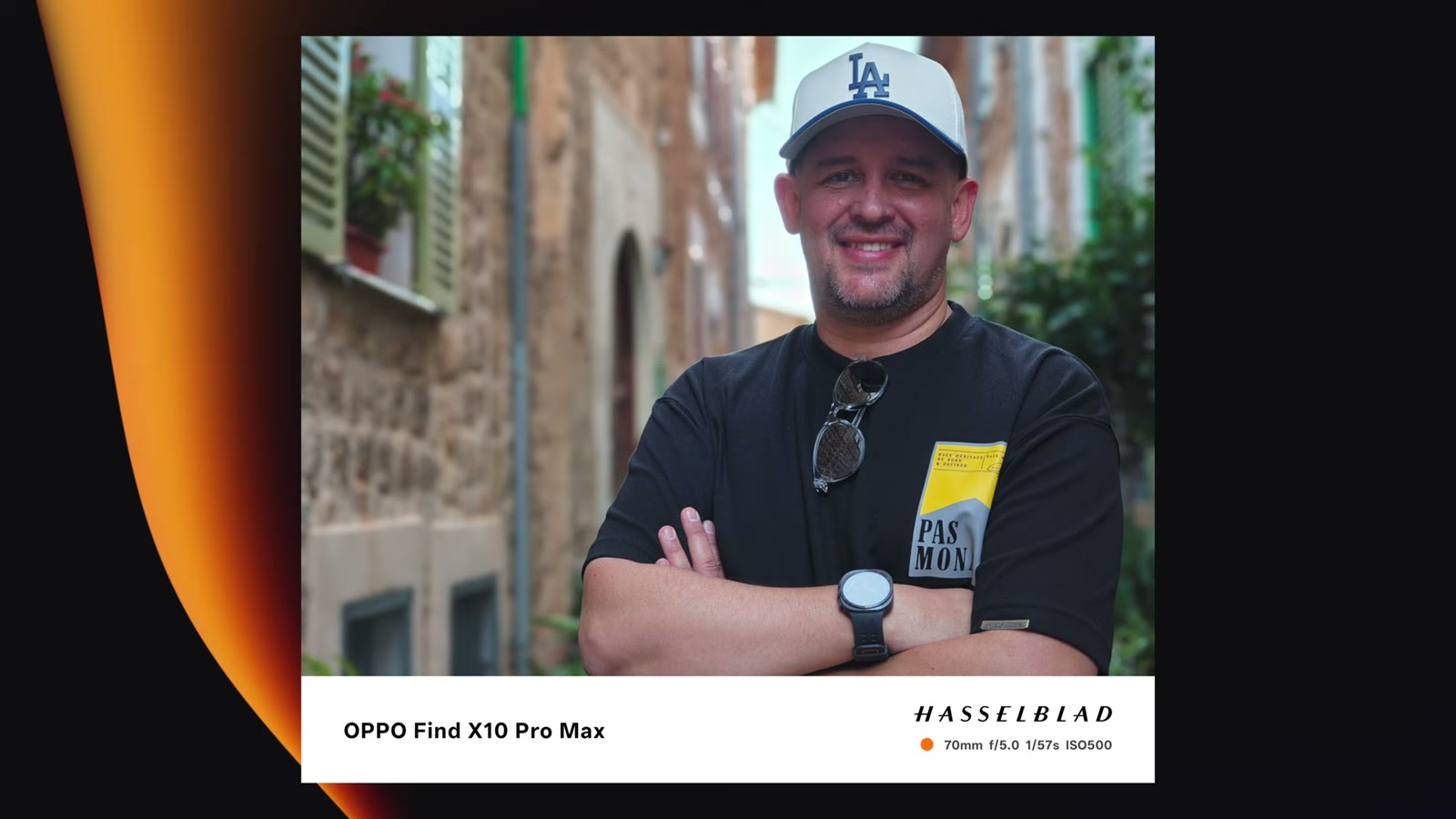
But the 70mm telephoto is my favourite, and it’s a peach of a lens. 70mm is my focal length: half-body portraits, and the street details you’d otherwise walk straight past. I’d often rather stand back and shoot on the long lens even when the main lens would get the shot, because I prefer what it does. That’s taste, not a spec.
It’s f/2.1, so not the sharpest, but it’s fast for a phone telephoto and it focuses down to 10cm, which means telephoto macro without putting the phone in someone’s face.
Because it’s 200MP you can crop to 6x and still have 50MP left. Everything saves at 26MP by default from 0.5x to 9.9x, so you aren’t filling your storage with enormous files, and there’s a high-res mode when you want the full 200.
The teleconverter
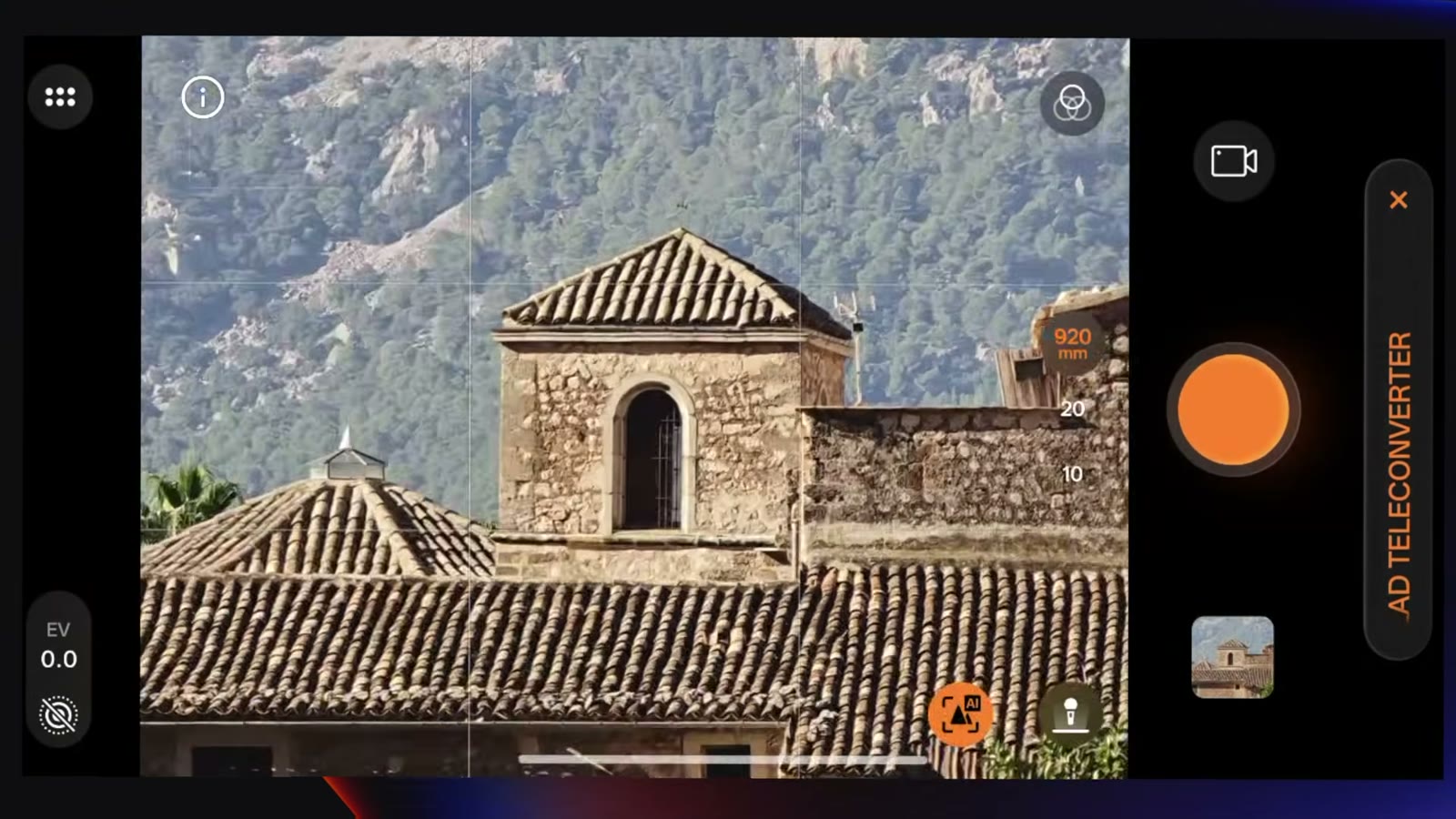
6x isn’t the end of the zoom. The teleconverter is Hasselblad-certified, 13 glass elements, three of them ED glass to cut colour fringing, with coatings against glare.
I tested it around the harbour in Mallorca at 1x, 10x, 20x and 40x, and every shot looks superb. For concerts at night, or sports, or landscapes, it’s wonderful.
Remember what it is, though: an extra piece of kit you have to buy, and then remember to carry.
17 stops of dynamic range
OPPO compares this to cinema cameras, which on paper is astonishing. The trick is in the sensor. Samsung and OPPO redesigned the pixel itself so it holds around 60% more light information before it clips.
The beauty is there’s no setting to worry about. It’s always on, which suits me because I’m not a photography expert.
I tested it in the hardest situation there is, the sun directly behind the subject, which ruins most phone photos and videos unless you have a filter or a proper camera. No blown out white, no dark silhouette.
Video, and the one catch
All three rear cameras shoot 4K60, 4K120 and 8K30, with Dolby Vision recording. Ultra Steady corrects tilt and up to five degrees of rotation, so your horizon stays level however shaky you are, which will matter to anyone filming without a gimbal.
For creators there’s Open Gate, recording the full sensor area: more height and 25% more width, so you can reframe afterwards for vertical or horizontal. It records in O-LOG 2 and you can apply your own LUTs on the phone after recording, which is close to professional-grade.
The catch: with Open Gate on, electronic stabilisation switches off. Bring a gimbal or a tripod.
Smaller thing, and it matters if you post a lot: OPPO has worked with Meta so video goes to Instagram reels and stories at near-lossless quality. You’d have to pixel-peep to find the difference, which is the point.
Performance, battery and software
A MediaTek Dimensity 9600 Pro on a 2nm process, with a vapour chamber. 12GB of RAM and 512GB of storage, which is plenty for me.
I played a demanding game at full quality for an hour with high performance mode on. Superb, no stutters I could feel, and no hot hands. Speakers are decent and symmetrical, haptics are tight, and it’s USB 3.2, which you’ll be grateful for when you’re moving 200MP photos or 8K video off it.
The battery is a very respectable 7,500mAh silicon carbon cell. OPPO claims it keeps over 80% of capacity after five years, the same claim as last year, and their lab says over 24 hours of YouTube streaming. Three weeks in I can back that up, but a battery wants a month to settle before anyone gives a proper verdict, so that’s for a later video. Charging is 80W wired and 50W wireless with OPPO’s own charger, and up to 55W on a normal USB-C PD charger, so you aren’t tied to their brick.
Software is ColorOS 17 on Android 17, and it’s smooth. The AI is getting more useful and less gimmicky: the headline is AI Mind Pilot with agent mode, where you ask it to do a job like sorting your files and photos and it goes and does it. Two caveats: agent mode starts with a limited set of services, and some features, including the AI photo agent editor, reach Europe later rather than on day one.
What I don’t like
Not much, and both are design choices rather than faults.
The weight. 228g is a lot for a slab phone, and coming from something lighter you’ll notice every day.
And the grip. It’s lovely to look at and a little too slippery at the back. Maybe I’m just used to the texture on the X9 Ultra.
So can it do it again?
Right now I’m thoroughly impressed. The camera has more character than anything I’ve used this year, the screen is proper flagship, it games for an hour without breaking a sweat, and it makes me feel like a better photographer without making me work for it.
Which brings us back to the price, and for a camera this good it’s actually very competitive. I’ve tested a lot of phones this year, and this is producing not marginally better but way better results than phones costing considerably more.
If you love photography and you want the shot finished in the camera rather than later on your desktop, this is the phone to beat so far.
It has the hallmark of another banger. I’m holding off calling it phone of the year, because it’s been three weeks and 2026 is a far tougher year than 2025, with good devices still to come. Ask me in December.
FAQ
Is the OPPO Find X10 Pro Max worth £1,499? For photography, yes. The OPPO Find X10 Pro Max produces noticeably better results than phones costing considerably more, with three 200MP cameras and photos that need no editing afterwards. Pre-order pricing is £1,399 with a gift worth up to £500, and OPPO refunds the difference if the price drops on Black Friday.
Is 200MP on an ultrawide camera actually useful? Yes. The edges of the OPPO Find X10 Pro Max’s 200MP ultrawide soften slightly, as every ultrawide does, but they don’t turn to mush the way a 50MP ultrawide does at the same point. It also has autofocus down to 4cm, so it doubles as the macro camera.
What is Master mode on the OPPO Find X10 Pro Max? Master mode is OPPO’s photography mode, and it’s darker than most phone cameras: moodier, with deeper shadows and some vignetting. It produces photos with character straight out of the camera. If it’s too dark, nudge the exposure in the pro settings rather than switching away from it.
Does the OPPO Find X10 Pro Max need the teleconverter? Not for everyday use. The 70mm telephoto crops to 6x while keeping 50MP. The Hasselblad-certified teleconverter extends that to 40x with excellent results, and it’s worth having for concerts, sport and landscapes, but it’s a separate purchase and another thing to carry.
How heavy is the OPPO Find X10 Pro Max? 228g, which is heavy for a slab phone. It’s well balanced for the weight, but after a long day of shooting you feel it on your wrist, and anyone coming from a lighter phone will notice it daily. The back is also a little slippery.
Behind The Lens is my free newsletter, and it’s where the longer testing lands first: whether that battery claim survives a proper month, how this holds up against everything else before the phone of the year pick in December, and the occasional honest “don’t bother” before it reaches a video. Sign up here.
You can also find me on YouTube and Instagram if you’d rather watch than read.