Smartphones · OPPO
OPPO Find X9 Pro: Better Than the iPhone 17 Pro Max?
Verdict
A complete camera phone with a battery that finally suits photographers and travellers. The Hasselblad teleconverter is not a gimmick, it turns this into a mini professional camera, and the 7,500mAh silicon carbon cell is a today battery. This is the pre-iPhone era of genuine innovation all over again, in the best way.
Pros
- 200MP periscope at a genuinely useful 70mm, with classic in-sensor crops
- The Hasselblad teleconverter: 230mm optical, out to 920mm for stills
- 7,500mAh silicon carbon, 80W wired, and 80%+ capacity promised after 5 years
- Cross-platform sharing that finally feels like AirDrop
- Master mode makes photography fun again
Cons
- The quick button catches your pinky and moves the zoom mid-shot
- Slightly slippery in the hand; you'll want a case
- RAW Max capture is a touch slower than the iPhone
I was in Barcelona for the global launch of the Find X9 series, but I’d already been living with the X9 Pro for a few weeks in London: travelling constantly, and taking it to a mate’s wedding where the lighting was awful and the phone was anything but. The full review is here.
One warning before the camera section: everything you see was shot on this phone, and if a shot looks unreal for a phone, that isn’t AI. OPPO and Hasselblad really cooked this year.
Design: grown up, and familiar in a good way
Flat display, super thin uniform bezels, a tiny front camera island with nothing shouty or intrusive. I think a lot of iPhone users would feel at home here immediately. The haptics are sharp, scrolling is precise, and there’s even a camera-control equivalent on the frame called the quick button.
The panel is a 6.78” LTPO OLED at 120Hz, resolution very close to the iPhone 17 Pro Max, and being flat is a real advantage for photography, editing and gaming. It’s not as anti-reflective as the Galaxy S25 Ultra, but brightness and text clarity outdoors have been totally fine. Build is IP68 and IP69 this year, which is reassuring if you live in rainy London like me. Weight distribution is good, though it’s slightly slippery, so a case is going on mine.
The camera: 200MP, and then the attachment
Hasselblad tuning is back, and the headline is a 200MP periscope telephoto sitting at a very useful 70mm for a true 3x optical look. What I appreciate more than the megapixel count is the ladder of in-sensor crops across classic focal lengths: 23mm at 1x with taps to 28 and 35, a 47mm crop at 2x, the 70mm optical at 3x, and an 85mm crop that has become my favourite. Every phone should have an 85mm equivalent. It’s just the perfect length.
Then there’s the Hasselblad teleconverter, which mounts via a dedicated photography case. This isn’t a digital party trick: you get 230mm optical reach, a clean 460mm crop at 50MP, and 920mm at 12.5MP for stills.
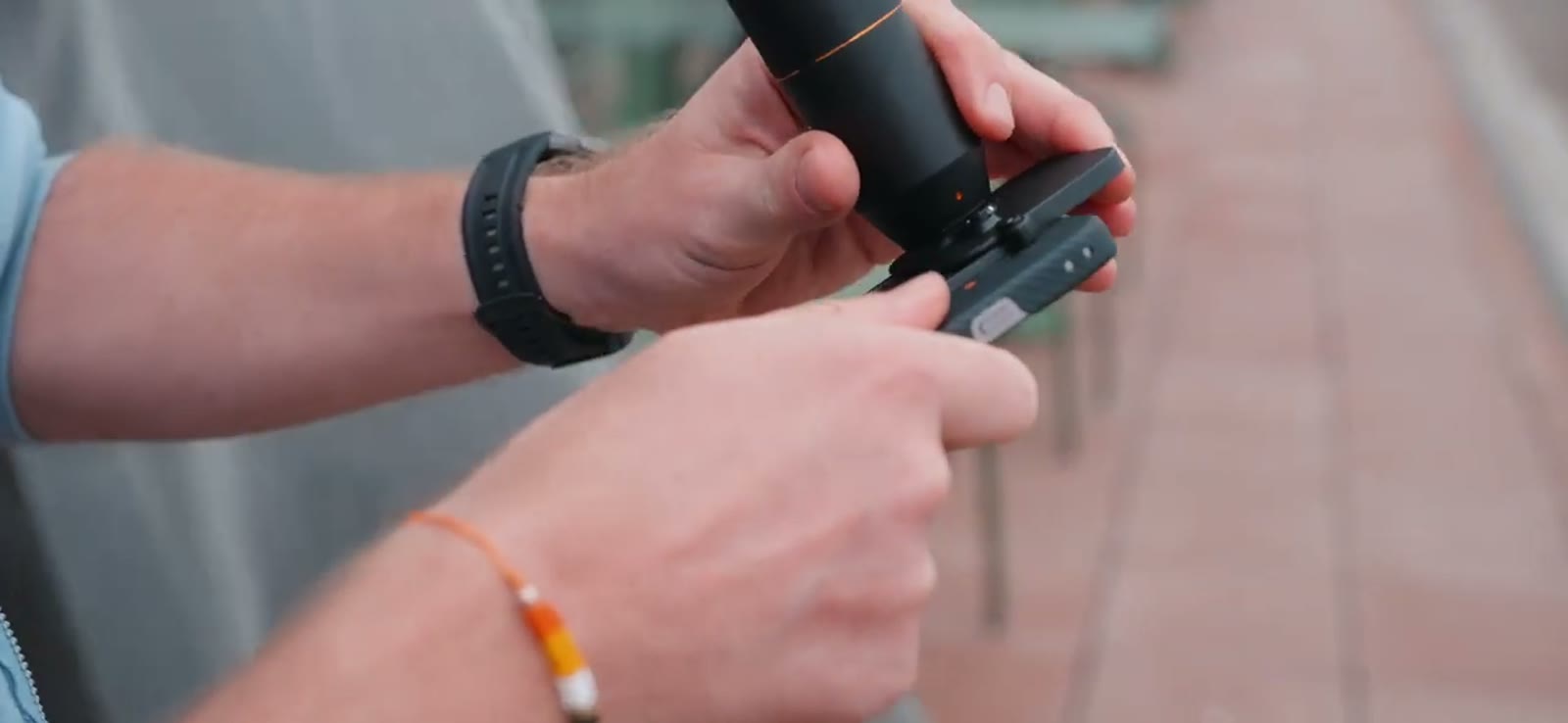
My shot of the Shard from a London rooftop is genuinely insane to me. Before anyone says it in the comments: yes, there’s processing, but a lot of that reach is optical. Not much impresses us anymore in smartphone photography, and this little attachment changed that for me. Holding that much reach and still having it look like glass did the work, not software, is a different kind of moment.
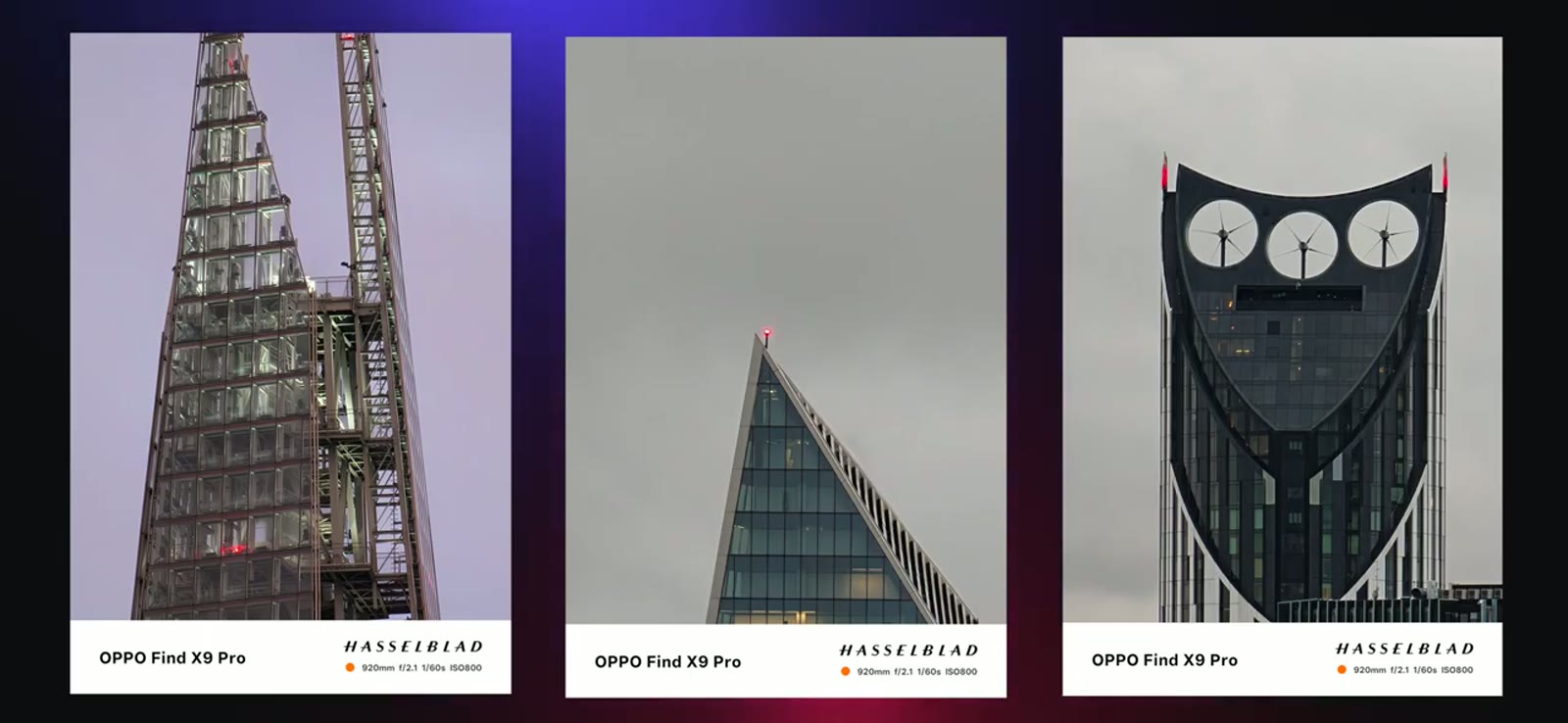
(Huge shout out to Becca Faraj, who saw me struggling on that rooftop and came over to help me secure the angles. Absolute legend.)
Colour science has matured too. Processing gets slightly over-creative in low light, but that plasticky HDR sheen we all used to complain about is gone. And master mode remains my favourite thing here: exposure controls, white balance, and an interface that doesn’t fight you when you want a slower shot at night. RAW Max is about half a second slower to capture than the iPhone, which matters if you’re firing off quick snaps, but RAW Max shots tend to be the ones you plan anyway.
Now the annoyance, and I appreciate OPPO letting me be openly honest here, because that isn’t true of every brand I deal with: the quick button. It’s beautifully designed and lovely when you mean to use it. But when I hold the phone for comparison shots, my pinky rests right on it, and nine times out of ten I discover I’ve zoomed in or out just as I’m taking the shot. Give us a sensitivity slider or a press-and-hold option. Right-handed users being intentional won’t hit this, but it happened enough to mention.
Performance and that battery
Inside is a MediaTek Dimensity 9500 on a 3nm process, and the simple version is: this phone is quick. The camera opens fast, focus locks fast (unlike the iPhone in some situations), app switching is instant, and heavy gaming stays stable without cooking my hands. Whatever the vapour chamber is doing, it works. Nothing about daily use feels second tier.
Then the battery: 7,500mAh, with 80W wired and 50W wireless. Let that capacity sink in. True story from that wedding weekend: I had an hour to travel-frazzle myself into a functioning adult, realised the phone I planned to shoot with was near death, plugged it in, showered, checked the suit still fit, and came back to 100%. Capacity is great, but capacity plus genuinely fast charging is what changes your day.
And this is third-generation silicon carbon, with OPPO claiming 80%+ capacity after five years. That’s a big statement in an industry where longevity has been the main worry about this technology. For me, battery and charging like this is part of what earns a phone the word “pro”.
Software: ColorOS 16
OPPO has been polishing the look for a while, but this year it’s the cohesion that lands: predictable gestures, lovely transitions, deep customisation, and a side dock for your own apps and shortcuts. The killer feature, and I mean this for every Android maker chasing iPhone switchers, is cross-platform sharing. Phone to Windows PC to the Apple ecosystem, and it’s by far the least painful I’ve experienced on Android. It genuinely feels like having AirDrop.
So who is the X9 Pro for?
If your camera habits are travelling, commuting, concerts, kids and sport from the far side of the pitch, or you simply love the look of these photos (portraits and compressed cityscapes especially), this phone doesn’t disappoint. The teleconverter tips it into mini professional camera territory, and that’s not an exaggeration. If you’ve watched me for a while, you know I’m not shy about calling out phones that are more marketing than substance. This isn’t that.
Using this phone reminded me of the mid-2000s, the pre-iPhone moment, in the best possible way: lots of genuine innovation, and OPPO very much pushing the envelope. Next up is the camera head-to-head with the iPhone 17 Pro Max, where things get properly interesting.