Smartphones · Samsung vs Apple
Galaxy S26 Ultra vs iPhone 17 Pro Max: The Brutal Truth
Verdict
One is the safe bet: cozy continuity, great at everything. The other takes risks and hands you features you might use once, if ever. For the way I use a phone, the S26 Ultra is the more capable, more versatile device. But the iPhone's battery discipline and sticky day-to-day features are real, and if Android isn't on your radar, the 17 Pro Max is the best iPhone in years.
Round by round
When we think about two brands in direct competition, Apple and Samsung are at the top of our minds. And when we think about the products that absolutely represent them, it’s hard to ignore the iPhone 17 Pro Max and the Galaxy S26 Ultra. One can be perceived as a safe bet: a cozy feeling of continuity and stability, great at everything it does. The other pushes more boundaries, takes more risks, and isn’t afraid to give customers features they might use once, if ever.
Here’s the honest frame before we start. There are phones out there that are technically better than both of these. But Apple and Samsung have built ecosystems, logistics and support networks that keep them cemented at the top, and this is the head-to-head most people are actually choosing between.
I’m not the quickest to release these comparisons, and that’s deliberate. It’s not about being first or showing you how pretty the boxes are; marketing will do that job for both companies. This is both devices in the real world: wind, noise, changing light, the way you’d actually use them. Every word of it came from my brain, not some AI-generated script. The full mega-comparison is on YouTube.
The display: Samsung leads the industry
Samsung took a genuine risk this year with the privacy display, and in normal viewing it’s very hard to notice anything changed. But before we even get there, Samsung starts with an advantage I’ve been banging on about for years: the Dynamic Island.
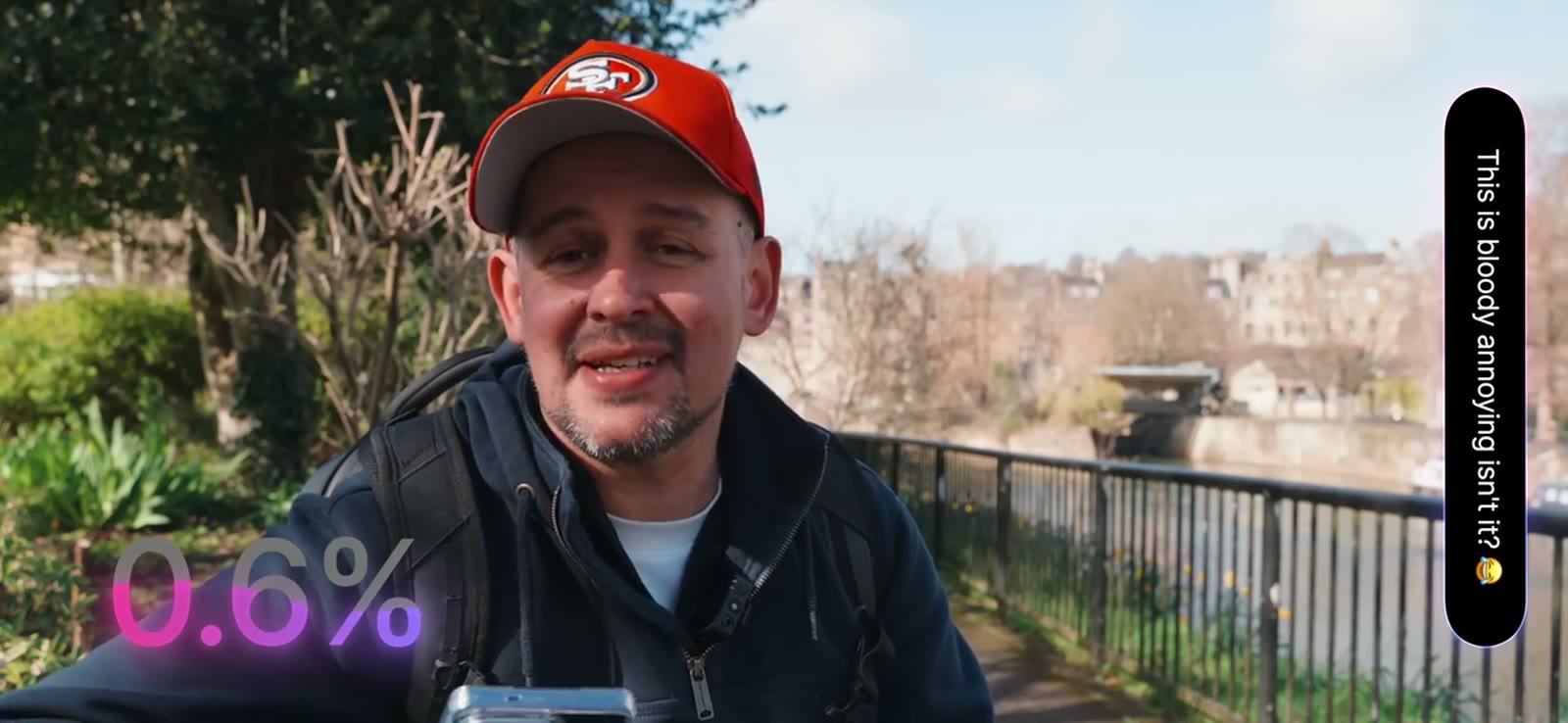
I did the maths, based on the pixels per inch of both panels. When it’s not in use, the Dynamic Island occupies 0.6% of the iPhone’s display as dead pixels, against 0.1% for the S26 Ultra’s pinhole camera. And yes, 0.6% sounds like nothing. But the practical loss is bigger than the number, because it breaks up the top-centre geometry of everything you watch. It’s just less immersive, and it’s bloody annoying.
Both displays are great for gaming and visible in all conditions. But if I have to pick one, it’s the Samsung, and not because it’s head and shoulders above the iPhone. It’s leading the industry. One honest caveat for Ultra veterans: to make the privacy display work at hardware level, the S26 Ultra is less anti-reflective than the S25 Ultra was. Still far more anti-reflective than the iPhone (than anything, really), but if you’re on an S24 or S25 Ultra and don’t care about privacy display, factor it in.
The tangible day-to-day stuff
As a primarily-Android user these days, the airport is a humbling experience. Apple Wallet predicts what you need, it’s always there, one tap while you’re faffing with bags at security. Google Wallet and Samsung Wallet have genuinely improved, but they’re nowhere near as fast or as friendly. And Face ID: I love it, and I wish more companies would build a proper, can’t-be-fooled version. I can’t blame anyone who stays with Apple for these sticky little things.
Conversely: the S Pen. Signing documents on the road, notes, and my favourite pastime, editing photos in Lightroom and getting the final details exactly right. No other slab phone has this. “Just get an iPad, bro.” Sure, but the Apple Pencil isn’t included, and that’s another pile of money and another device in your bag.
On the scales, both companies pivoted back to aluminium this year, and the numbers matter. The 17 Pro Max is 233g and 8.75mm; Samsung trimmed the S26 Ultra to 214g and 7.9mm. That 19 grams makes a real difference side by side, and it seems plenty of people agree, judging by the reports of buyers trading the Pro Max down to the smaller iPhone 17 over sheer fatigue.
AI: this isn’t close anymore
It would be too cliché to just say Apple Intelligence sucks and Galaxy AI is much better. To me it’s not about AI features per se. It’s about how much manual work the assistant actually removes, and crucially, what these devices do for accessibility.
Apple has more accessibility features on paper, like eye and head tracking and hearing-aid pairing, and credit where due. But in my hands-on tests, Samsung’s implementation wins where it counts. Live captions: Samsung’s are faster and more accurate with heavy accents and background noise. The magnifier and Point and Speak on the iPhone were a mess in my testing. And then there’s the one where Samsung is absolutely destroying everyone, Apple included: plain-language device control. “I left my reading glasses at home, can you make the font bigger?” One UI just does it. You don’t need to know the setting’s name or which menu it hides in. Try that on the iPhone: “I didn’t catch that. Could you try again?”
The interpreter feature on the S26 Ultra is insanely good, the entire conversation captured with no missing words, especially paired with Galaxy Buds. The iPhone’s attempt is a mess, really. And AI photo editing by simple prompt inside the gallery? There’s little point comparing. The iPhone’s Clean Up tool removes unwanted subjects, and that’s about it. The Pixel 6 could do that five years ago.
And then there’s automation, which I’m calling a draw. Siri Shortcuts is the deeper, more powerful toolset, full stop. But Modes & Routines is a badly underrated feature and no slouch, and it covers what most people actually automate day to day. Honours even. Apple’s writing tools do have the friendlier interface, though as a Brazilian living in the UK, the output is just too Americanised for my taste.
Performance: one of them is faking it
Bear with me, this gets geeky, but it cuts through the marketing jargon. Both chips are 3nm. Apple’s A19 Pro runs a six-core setup that edges out Samsung in single-core work (app launches, UI fluidity) while drawing only about 12W, so it stays cooler. The Snapdragon 8 Elite Gen 5 for Galaxy goes completely overkill: an aggressive eight-core design that crushes the iPhone in multi-core workloads, with a 54% lead in the benchmarks, but drawing a thirsty 19.5W.
What does that mean in real life? Games stopped being a useful test years ago; even mid-rangers run Genshin Impact convincingly now. So here’s mine: export a 4K video in CapCut while playing a heavy game on ultra settings, after thirty minutes of gaming so the phone is already hot.
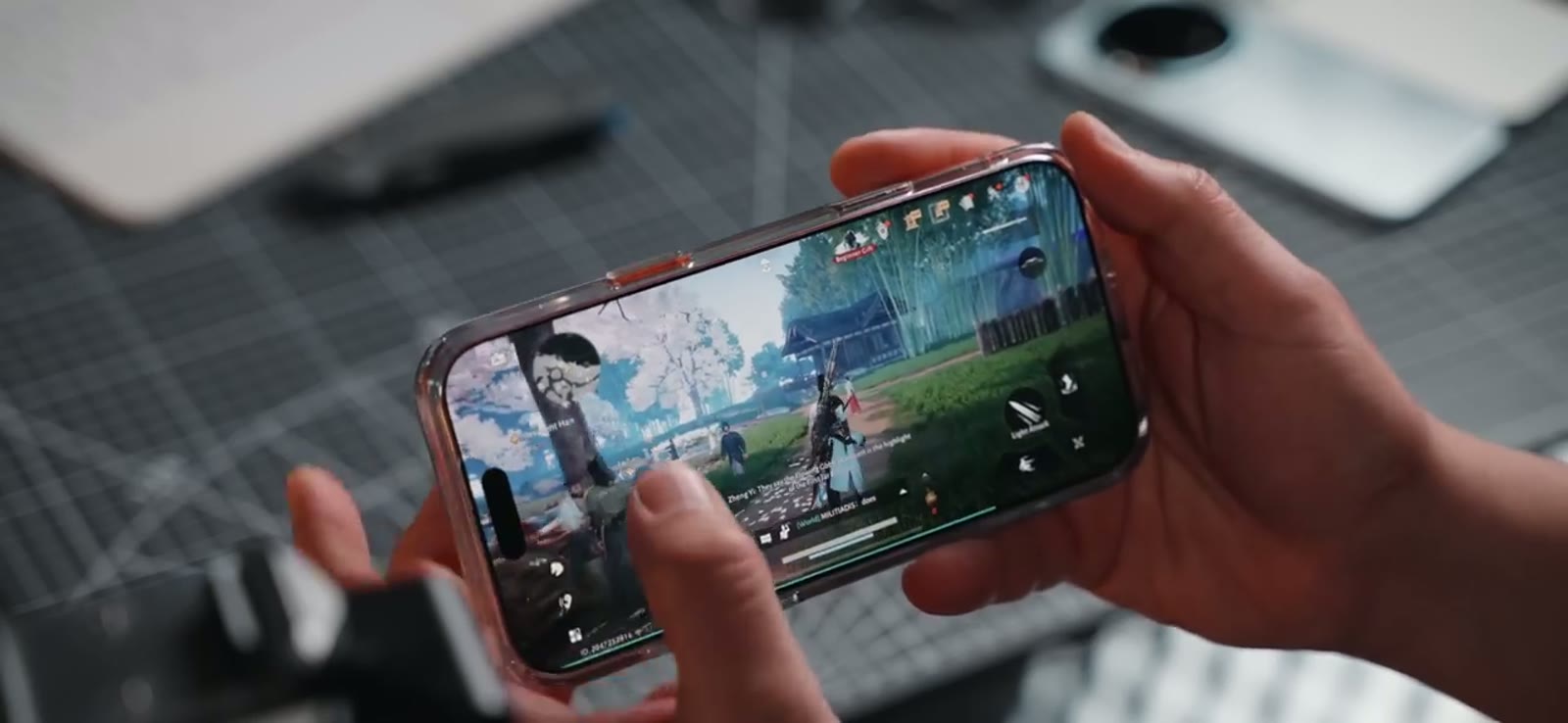
Credit where due: the iPhone has improved here. It crashed outright at this test in my Honor Magic 8 Pro review, and in my more recent testing it doesn’t crash anymore. What it does now is sneakier. It pauses the export while you game, resumes when you switch back, and pauses again when you return to the game. The S26 Ultra? Export to 10%, back to the game, check again at 50%, game some more, and it’s nearly done. The phone hit around 45°C, brightness at max, warning about heat, and it never dropped a frame or throttled. That’s the difference between these two chips, and it’s why both companies quietly went back to aluminium: it dissipates heat better than titanium, and thermal management now beats marketing metal.
Battery: the iPhone takes this, and it’s not close
I’m going to go off-script, because every review I’ve watched says the S26 Ultra’s battery is fine, and I started wondering if I’m doing something wrong. So I ran both phones through the same real day. Same SIM type, same network, same 5G, maps open on both, cameras used equally, full transparency on cycle counts and battery health in the video.
By lunchtime the Samsung had drained noticeably faster. By 5pm the gap was huge. By 6:45pm, the S26 Ultra was in power-saving mode and all I could do was stare at Twitter and pray it survived long enough to navigate back to the car. The iPhone? Still going. In fact, I was filming the update on it.
Charging softens the blow. Samsung’s 60W gets you to 75% in half an hour and full in under 50 minutes, against Apple’s 40W (50% in about 20 minutes), and the S26 Ultra has reverse wireless charging for your earbuds, which Apple simply doesn’t offer. But the honest verdict is that both companies are about two years behind where battery technology should be. Silicon carbon exists. Honor and OPPO ship it. And there’s a genuinely encouraging sign from Samsung’s own house: the Z Fold 8’s battery has moved at least partly to silicon carbon. If that carries into the S27 Ultra, I hope this is the last time I have to complain about a Samsung battery.
The multitasking rant, abridged
Apple, for the love of God: being able to run two apps side by side is one of the most basic things any phone can do, apart from the iPhone. You already have the software; iPadOS 26’s windowed apps genuinely smoke Samsung DeX. I’m not asking for the full iPad experience, just two resizable apps on a 6.9” display. It hasn’t stopped Samsung selling tablets, and it won’t stop you. (The full sketch in the video, featuring a very nervous Apple employee named Jared, is here.)
Cameras: the f/1.4 difference
Both phones deliver great standard shots, though the “natural iPhone look” is feeling tired next to the character Leica and Hasselblad collaborations bring elsewhere. Samsung’s colour science, after three or four years of steady improvement, is now excellent. Arguably too similar to Apple’s, but that’s another conversation.
The quiet headline is the f/1.4 aperture on Samsung’s main lens against the iPhone’s roughly f/1.8. In daylight you mostly see extra detail, occasionally too much sharpness (tuneable in settings). In low light, it stops being subtle.
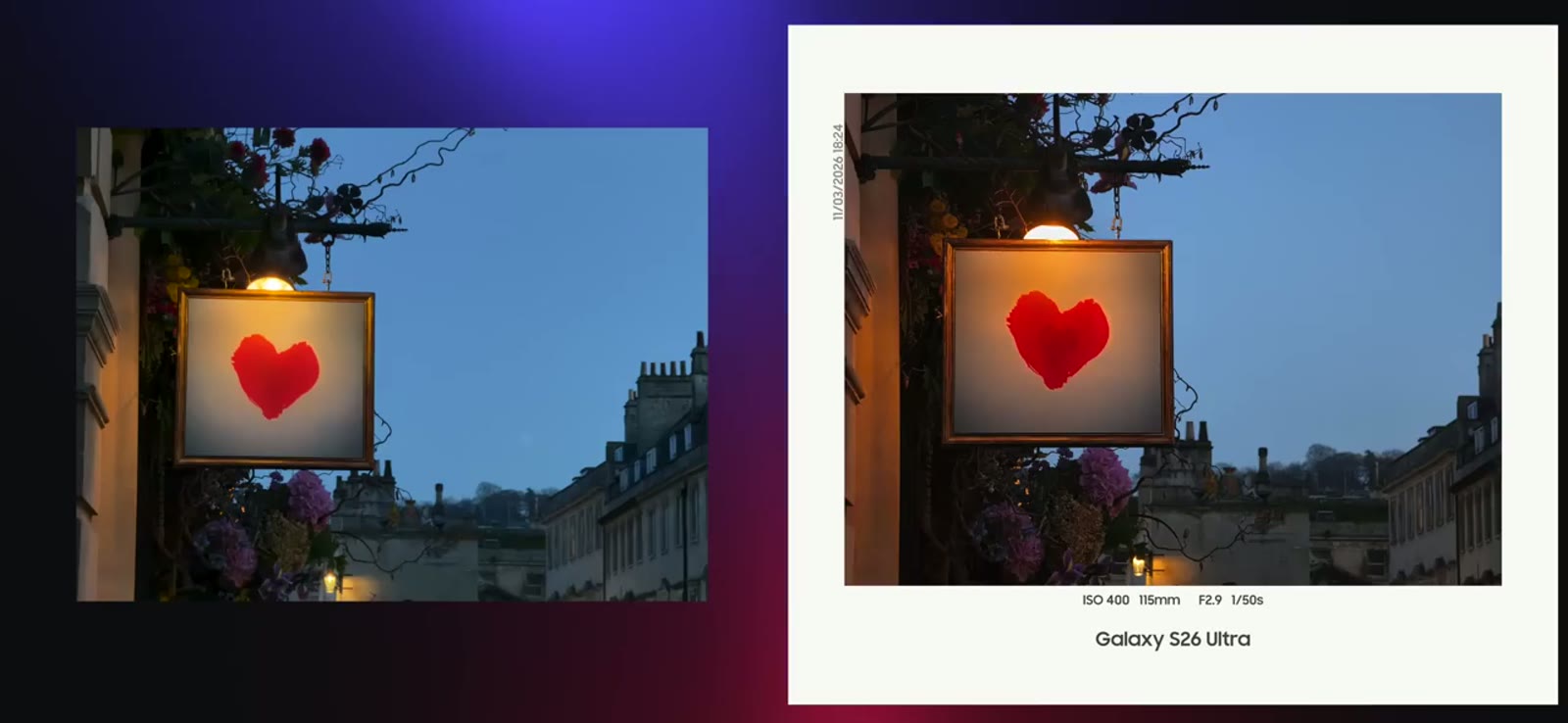
Where the S26 Ultra retains individual leaves in dark foliage, the iPhone turns everything to mush: grain in the shadows, texture gone, even on a lit-up sign. One shot that stunned me was a 24MP frame, not even the 50MP mode. The telephoto tells the same story, with an extra annoyance on the iPhone: the minimum focus distance is so large that flowers less than a metre away simply won’t focus. The telephoto is my favourite lens, and that drives me nuts.
Selfies are the one place sharpness cuts both ways. The S26 Ultra’s improved processing captures every crevice, and if you’re my age you might prefer the softer look the iPhone gives you. Portraits, though? Samsung smashed it this year. The iPhone loses edge detail and its portrait colours are all over the place.
And video. We know the iPhone is king. Psych. It’s simply not the case anymore, and hasn’t been for me since the S23 Ultra. With the S26 Ultra, Samsung took a leaf from Apple’s own playbook and built a cinema camera: log recording with LUTs applied on-device, a cinematic grade without ever opening an editor. I’ve done it in the back of a cab. Apple’s ProRes log workflow through Blackmagic is still lovely if you edit on a Mac, but Samsung put the whole pipeline in the phone.
The blind call test
I stood on a noisy street near the studio and called my friend Johnny twice. Same spot, both phones, without telling him which was which.

On the iPhone: perfectly good, no traffic audible, slight echo. On the S26 Ultra: “Now you sound like you’re in the studio. It doesn’t sound like you’re out at all.” He picked the Samsung without knowing it was one. Congratulations, Johnny. You just moved from Apple to Android.
The bit nobody covers: repairability
What happens when you break these? iFixit scores the S26 Ultra an incredible 9/10. Samsung dropped the glue for mechanical pull tabs, and the camera modules are individually replaceable. The iPhone scores 7, dragged down by Apple’s stubborn software parts-pairing, which fights independent repair shops with persistent OS warnings even on genuine parts. For devices this expensive, that matters over a 10-year life.
The verdict
For the way I actually use a smartphone, the S26 Ultra wins this comparison: seven rounds to two on my scorecard, with automation honours even. The display leads the industry, the f/1.4 camera and on-device video pipeline are a creator’s dream, the multitasking is honest where the iPhone’s is sleight-of-hand, and it’s the phone I can customise, repair, and depend on.
But the two rounds the iPhone wins are not small ones. Battery discipline on a heavy day is the practical concern for a lot of people, and the iPhone simply lasted. And Wallet and Face ID are the definition of sticky. If you’re not interested in Android, this is the best iPhone in years — the biggest camera step since the 13 Pro Max, in my opinion.
Full transparency: neither Samsung nor Apple knew I was making the video this article comes from, and neither paid me anything. This comparison is 100% independent. If you think I’ve missed anything, the comments on the video are open, where the first hundred got voice-note replies.