Smartphones · Samsung vs Samsung
Galaxy S26 Ultra vs S25 Ultra: The New One Tries Too Hard
Verdict
The S26 Ultra wins this head-to-head, no question: more confident cameras, the best video workflow Samsung has ever shipped, and that f/1.4 lens doing honest work. But if you already own an S25 Ultra, don't let anyone tell you to upgrade. And on a proper discount, the old one might be the smarter buy. Samsung's fiercest competition is Samsung.
Round by round
Today we’re putting the Galaxy S25 Ultra up against its replacement, and not just to count megapixels and see which one is technically better on a spreadsheet. That would be too easy. The much more interesting question, the one a lot of you asked me, is this: has Samsung actually pushed the Ultra forward? Or did the S25 Ultra get so good that Samsung is now competing with itself?
If you just want the answer and you’re off: the S26 Ultra wins this head-to-head, no question. But if you can find the S25 Ultra on a proper discount, it might be the smarter buy. By the end of this you’ll know exactly which camp you’re in. The full video is here, including a day out at a certain famous farm and its pub, because real-world testing beats a studio brick wall every time.

Photos: the twist nobody expected
Every time I pick up the S25 Ultra I’m reminded why I liked it so much last year. Sharp shots, punchy colours, flexible zoom. True story: my wife is running my old 16 Pro Max and she’s already eyeing the S25 Ultra. “Can I have that phone now?”
The biggest win on the S26 Ultra is none of the fancy stuff. It’s the f/1.4 aperture on the main lens, a simple hardware upgrade doing most of the heavy lifting, and I like that because it means less reliance on AI and processing. The S26 Ultra just feels more confident. The focus is a fraction more decisive, the exposure more reined in, and where the S25 Ultra occasionally misses a fast-moving shot (rare, but you zoom in later and go “that one just missed”), the new one keeps nailing them. For me the difference between a good camera and a great one isn’t the best single photo. It’s how many photos you didn’t delete.
But here’s where it gets genuinely interesting, and it’s not what I expected to be saying. Look at the greens, the texture, the flowers.
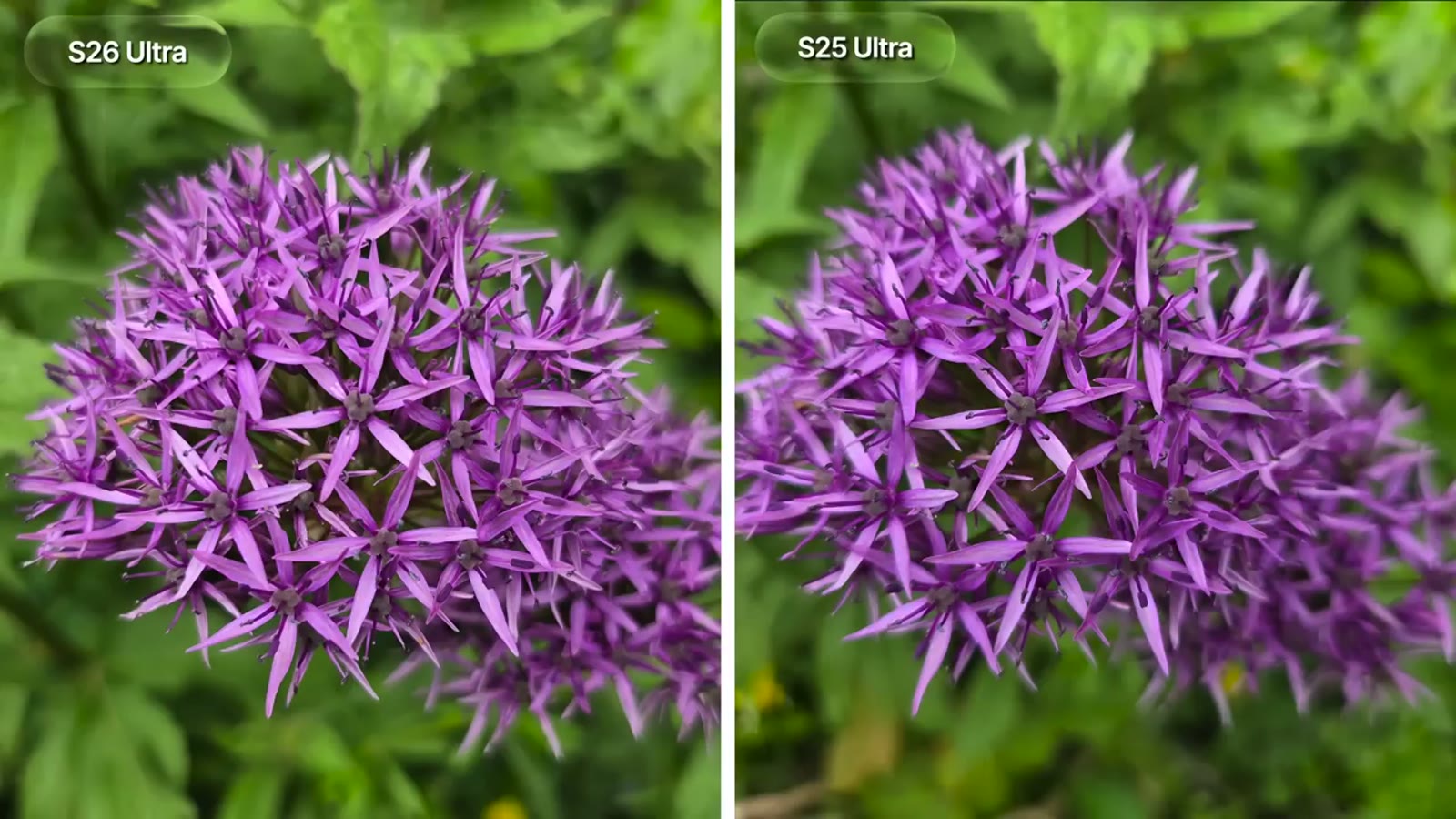
Side by side, it’s the S26 Ultra pushing colours slightly harder, nudging them just past what my eyes saw on the day. Most people will like that. It’s punchy, it’s postable. But the S25 Ultra, most of the time, is handing me the more natural shot, the one that looks like the scene actually looked. And the kicker: the S25 Ultra is doing that with 12MP defaults while every S26 Ultra shot here is 24MP. The newer phone is the one trying slightly harder to impress you. Once you see it, you can’t unsee it.
Zoom: still a personality trait
Samsung made zoom a core personality trait of the Ultra years ago, and the S25 Ultra still holds its own beautifully. Sensible focal lengths are crisp and usable all the way to 30x; beyond that it gets silly. Just because a phone lets you zoom to some arbitrary 100x doesn’t mean you should. There’s always a threshold where it stops looking like photography and starts looking like AI slop. The honest caveat for both: OPPO, Vivo, Honor and Huawei are doing serious telephoto work right now, and that’s where the real zoom race is happening.
Video: where the gap opens
The S25 Ultra’s footage remains rock solid. Vibrant, stable, highly usable, and I’ve said since the S24 Ultra that Samsung video is on par with the iPhone, if not better. But the S26 Ultra? Filming in APV log with the LUT baked in on the phone itself, no cloud round-trip, no Mac needed, is a sweet workflow for anyone posting anything online. The S25 Ultra has log, but not this. I’d love Samsung to let us load custom LUTs next (Xiaomi and OPPO already do), but even as-is, this is really hard to beat right now.
I care about this a lot because phones are part of my job: behind the scenes, B-roll, shorts. The best camera is the one you’ve got on you, and when a device gives me less fixing to do in the edit, that’s where the S26 Ultra pulls ahead. Not by miles. But if you shoot a lot, you’ll notice.
Performance: one crazy test
Both feel fast, fluid, ridiculously capable. Day to day you won’t feel a dramatic difference unless you’re a benchmark nerd. So I tried a crazy scenario instead: exporting a 4K60 video while hammering a heavy game.
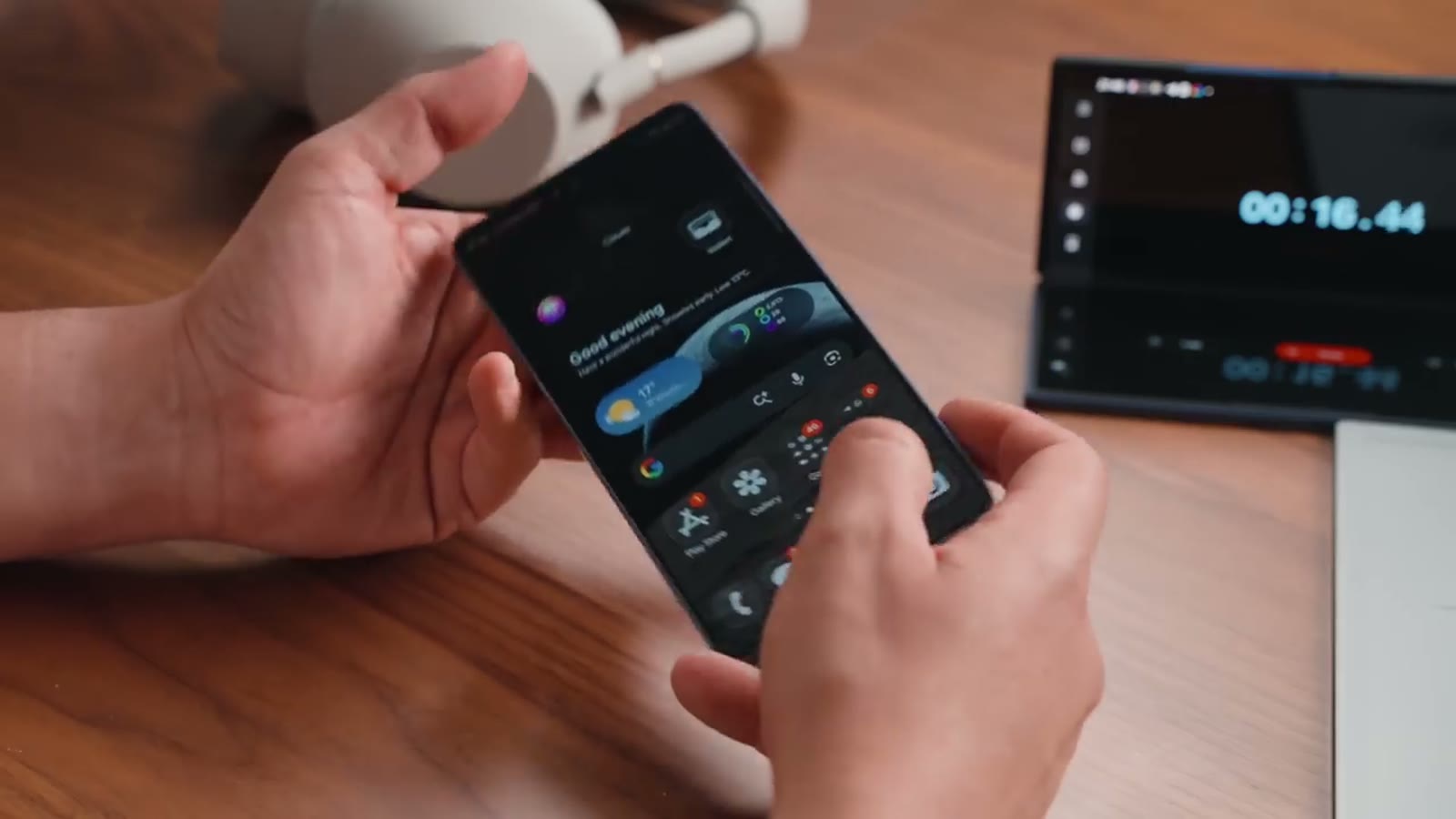
The S25 Ultra survives it, taking a minute and a half for the export. The S26 Ultra does the same job in 20 seconds. Is anyone doing this daily? No. But it shows you what the Snapdragon 8 Elite Gen 5 headroom looks like, and how each phone behaves at its limit.
Battery: my one real gripe, on both
I’ll be straight with you: both these phones disappoint me. They’ll get you through a normal day fine. The problem is that “fine” is not enough when you’ve spent Ultra money. Use one as a tool rather than a WhatsApp machine (shooting outdoors, travelling, max brightness, 4K, lens-switching) and I’m panicking for a charger by 2 or 3pm. Ask anyone who’s met me at a tech event recently.
Meanwhile OnePlus, OPPO, Honor and Xiaomi are pioneering silicon carbon, cramming bigger capacities into slimmer bodies. I get why Samsung plays it safe with batteries. Some of us remember why, emotionally. But the Ultra is supposed to be the apex predator, a zero-compromise device. Samsung, please.
The verdict
The S26 Ultra is the better phone. Of course it is. The camera science is more mature, the video more composed and reliable, the whole experience meticulously refined. If you’re a creator, a heavy traveller, or someone who simply demands Samsung’s most polished camera, it’s the one to get, and if you make money with it, a no-brainer.
But the S25 Ultra remains stubbornly, annoyingly brilliant. If you already have one in your pocket, don’t let me or anyone else tell you that you need to upgrade. And if you’re shopping and find it on a heavy discount, the maths gets very tricky for the S26 Ultra. That’s the real takeaway: Samsung’s fiercest competition right now isn’t Apple, and it isn’t the Chinese brands. It’s Samsung itself.
One more thing: this comparison is 100% independent, Samsung had no say in any of it, and the comments are open with voice-note replies. Am I alone on this battery thing, or is it time Samsung joined the silicon-carbon party?