Smartphones · OPPO
OPPO Find X9 Ultra: This Smartphone Makes Others Look Lazy
Verdict
A Hasselblad in your pocket, and for once the PR line holds up. True 10x optical zoom achieved by folding light five times, LUTs you can import yourself, and a battery that shrugs off a full shoot day. It runs warm and the selfie camera struggles in low light, but this is the phone making everyone else look lazy in 2026.
Pros
- True 10x optical periscope, plus 20x optical-quality, in a module 30% smaller
- Import your own LUTs and grade OLOG 2 footage on the phone
- 3,600 nits peak, down to 1 nit with 144Hz variable refresh
- 7,000mAh means the warmth never turns into battery anxiety
- ColorOS 16 with genuinely useful AI (the menu translation saved me in China)
Cons
- Gets noticeably warm during heavy 4K60 or RAW Max shooting
- Selfie camera in low light is poor: grainy, with a rolling-shutter wobble
- UK pricing is roughly double the Chinese price
For years the Western smartphone market has been trapped in a comfortable bubble, conditioned to believe that true premium quality only arrives with an Apple, Google or Samsung logo on the back. Step outside it and you realise something quite brutal: most of our usual safe bets have got comfortable, and the traditional tech media seems to be downplaying that.
Being in China for the first time made something click. Challengers like OPPO aren’t trying to compete with other smartphones anymore. They’re trying to rival dedicated cameras. At the launch event they called this “a Hasselblad in your pocket”, and from an engineering and colour science perspective, it really is. The full review is here.
A transparency note up front, because it matters: this video is not sponsored by OPPO. They paid for my flight and accommodation in China, where I was one of hundreds of creators and press, but no money changed hands and what follows is my raw experience, good and bad.
The 10x lens: physics, folded
Most phones cap their telephoto at 4x or 5x and crop to fake anything beyond. Not here. OPPO engineered a system that bounces light about five times inside the phone to deliver true 10x optical zoom, folding a massive telephoto lens into a module 30% smaller.
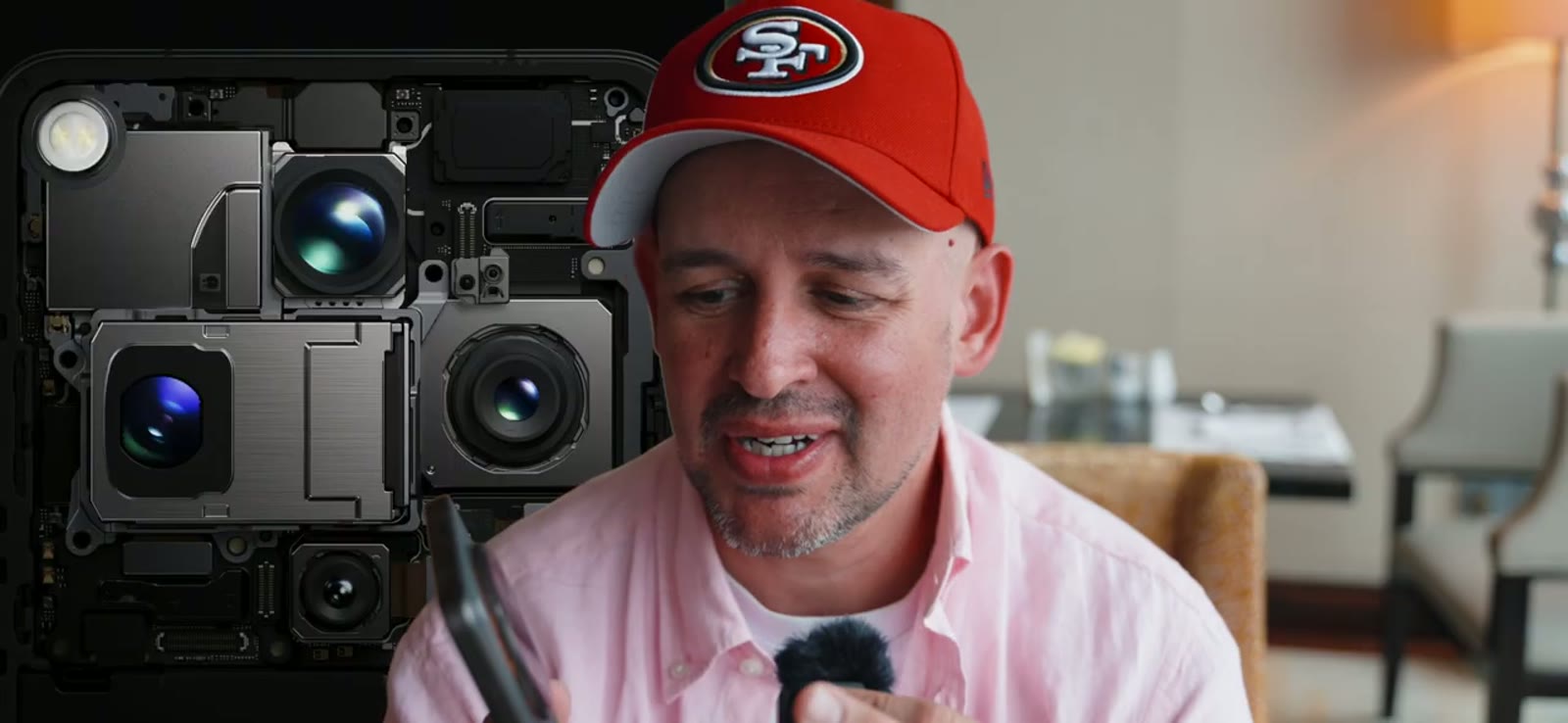
What you get is a Hasselblad 50MP 10x true optical zoom plus 20x “optical quality” zoom. Forget the specs for a second and just look at the clinical detail, not only at 10x but well beyond. On most phones, including the latest iPhone and Samsung, that range collapses into digital noise with AI trying to paper over the missing optics.
Low light is no problem either. Chengdu was the perfect place to prove it: the river, the light shows, traditional evening performances, and genuinely pitch-black scenarios that would defeat a normal phone.

The display, and the warmth
Outdoors in blazing sun this display has been a lifesaver: 1,800 nits in high brightness mode, peaking at an insane 3,600. It lacks Samsung’s anti-reflective coating, but brightness covers it. At the other extreme it dims to a single nit with high-frequency PWM, so late-night reading is comfortable, and 144Hz variable refresh keeps everything smooth. Slim bezels, a tiny pinhole selfie camera, and mercifully no Dynamic Island-style cutout.
Now the honest bit: this phone runs warm. Warmer than others on the market, and it reminds me of the Xiaomi 15 Ultra last year. Start recording 4K60 or shooting RAW Max in master mode and you’ll feel it. I hope that’s fixable in software. But here’s the thing that makes it liveable: with over 7,000mAh, the warmth never turns into battery anxiety during a shoot, which is more than I can say for the S26 Ultra or the 17 Pro Max. At the end of April 2026 this phone is up there with the very best, if not the best. It just isn’t quite perfect yet.
On raw performance, my usual brutal test (a heavy game running while a 4K60 export chews away in the background, switching between the two) posed no problem at all. Of everything I’ve tested in the past year, only one phone failed that test outright, and yes, it was the iPhone.
Out in the wild: Leshan and the pandas
This is exactly my kind of review: take the phone out of the studio and use it the way you would on a trip. We drove two and a half hours to Leshan, then took a short boat ride to the largest sitting Buddha in the world, carved into a cliff face over 1,300 years ago.

Shooting from a moving boat is a hard test for any camera, and we’re punched in at 10x video here, rock steady. Close enough to study the coils of the hair and the holes in the body, which hide an ingenious ancient drainage system protecting soft red sandstone from erosion. Clever engineering then, clever engineering now.
The next day, pandas. Fun fact: bamboo has so little nutritional value that an adult eats between 12 and 40 kilos a day, spending around twelve hours just munching. The young ones are constantly on the move and completely unpredictable, so a phone that punches in this far while staying rock solid meant candid moments without losing a shred of detail.

The camera modes, and the thing I’ve asked Samsung for
Bringing RAW files into Lightroom gets you extremely professional results, but what I like is that the camera isn’t intimidating. XPan is a joy in both orientations, especially with the film looks. Time-lapse with a 10x optical zoom opens up genuinely new possibilities. And long exposure, which I’ve enjoyed on the X9 Pro and OnePlus phones, finally produces light streaks that look continuous rather than dotted. Not perfect yet, but far more natural.
Then the one that made me sit up. You can import your own LUTs, and OPPO were almost blasé about it. I’ve been asking Samsung for this for two years, ever since the S25 Ultra shipped log video. Samsung now bakes in their own cinematic profiles, which is lovely, but OPPO lets you download theirs and load your own. I tried twenty or thirty of mine and they all sat there, easy to reach in the camera. Combined with OLOG 2, the pro video workflow here is now better than the iPhone’s or the S26 Ultra’s.
OPPO’s chief product officer said this is not just another flagship phone, it’s your next camera. Usually I’d laugh at a PR quote like that. Standing there looking at these shots: you know what, he might be right.
The price, and where I landed
I have to talk about the price, because it genuinely surprised me. Sitting at the launch, the local reaction to the Chinese price was real excitement, not staged hype, and I couldn’t understand why until we worked out the conversion. In the UK it lands at roughly double, which puts it above both the S26 Ultra and the iPhone. To be fair, it is way more phone than the iPhone in my opinion. But that markup, which I suspect is taxes rather than OPPO, is hard to swallow. As it stands, importing may well make more sense than buying locally.
If you’re already in the OPPO ecosystem, is this enough to make you upgrade? And if you’re not, is this enough to make you try? Tell me in the comments. Next up: how it compares with its own little brother, which turned out to be more interesting than the price gap suggests.